Anna’s Hummingbirds
From egg to flight – in 24 days
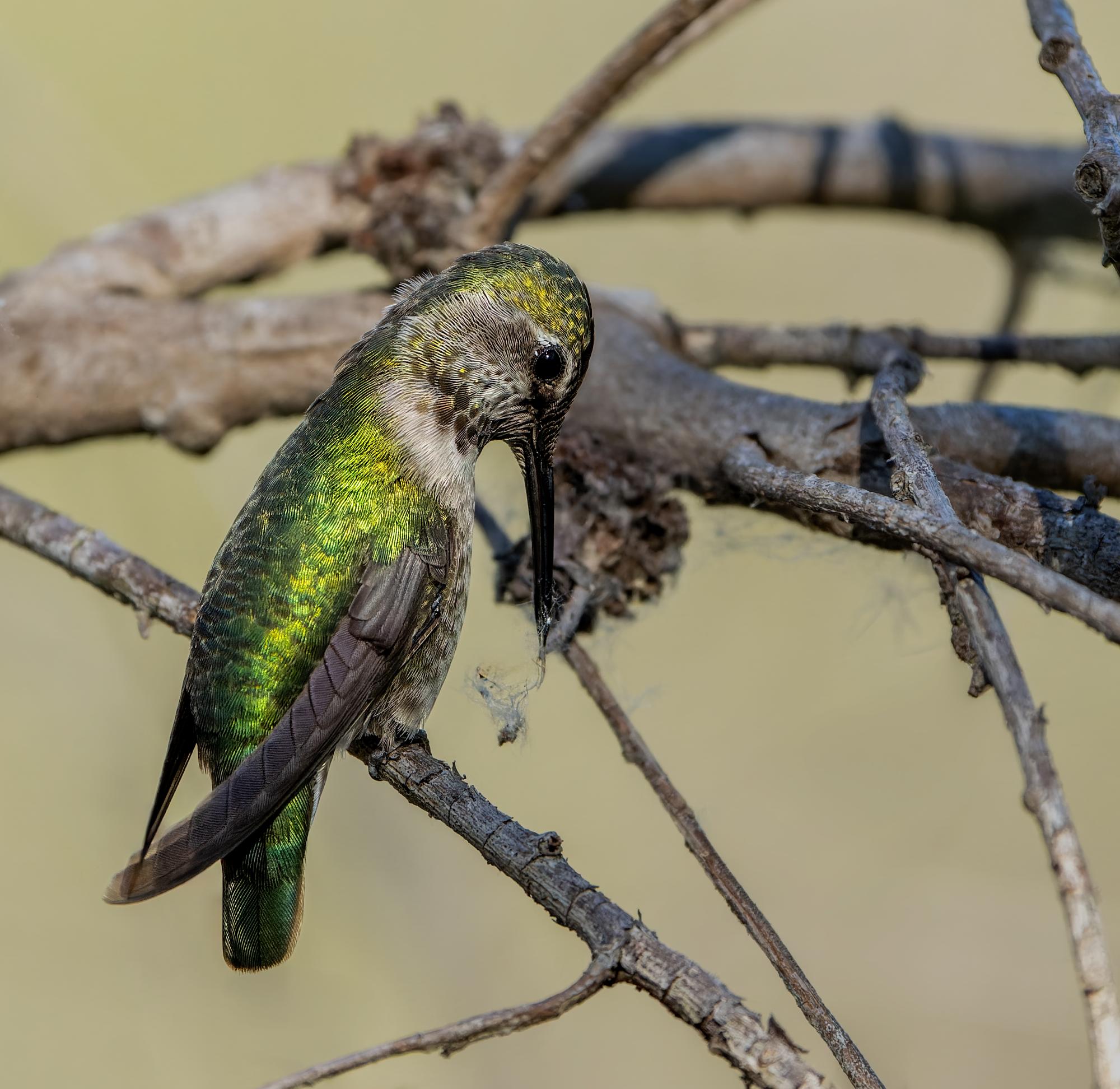
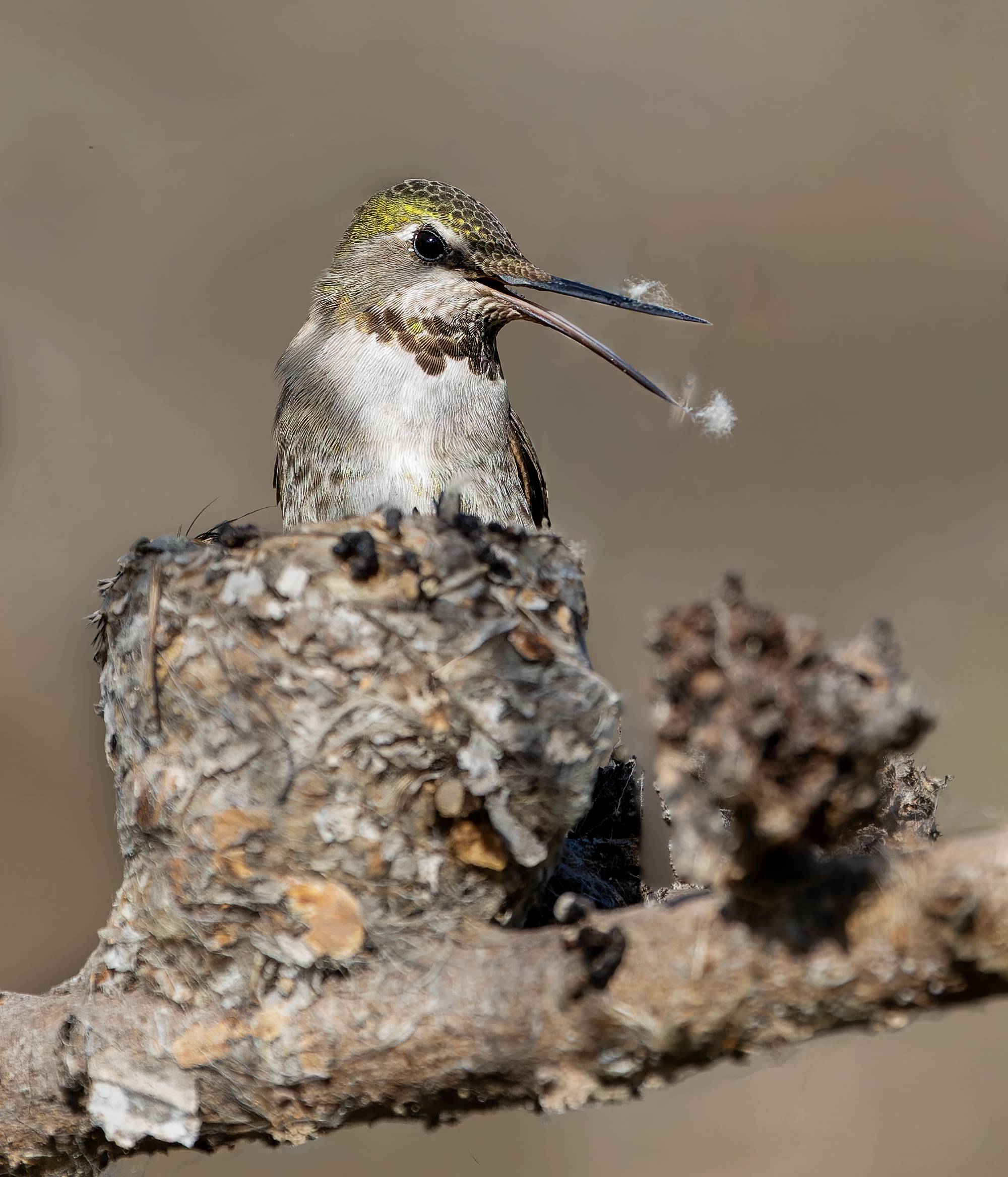
Female Anna’s hummingbirds raise their young alone, which starts by the female building a cup-shaped nest of spider silk, plant fragments, and lichen. The spider silk is an important component of the nest, as it gives the nest the flexibility to expand as the chicks grow larger.
When the nest is complete, the mother lays two tiny eggs, each about the size of a jelly bean, and incubates them for 14–19 days. Once the chicks are born, the mother feeds them a slurry of regurgitated insects and nectar for 18–28 days until they fledge, which is the term used for leaving the nest to live independently.
From February 1 to February 24, 2026, I was fortunate to be able to document this female Anna’s Hummingbird feeding and raising her chicks until they fledged. So let me take you on a 24-day journey inside the world of an Anna’s hummingbird raising her young.
Nest Building
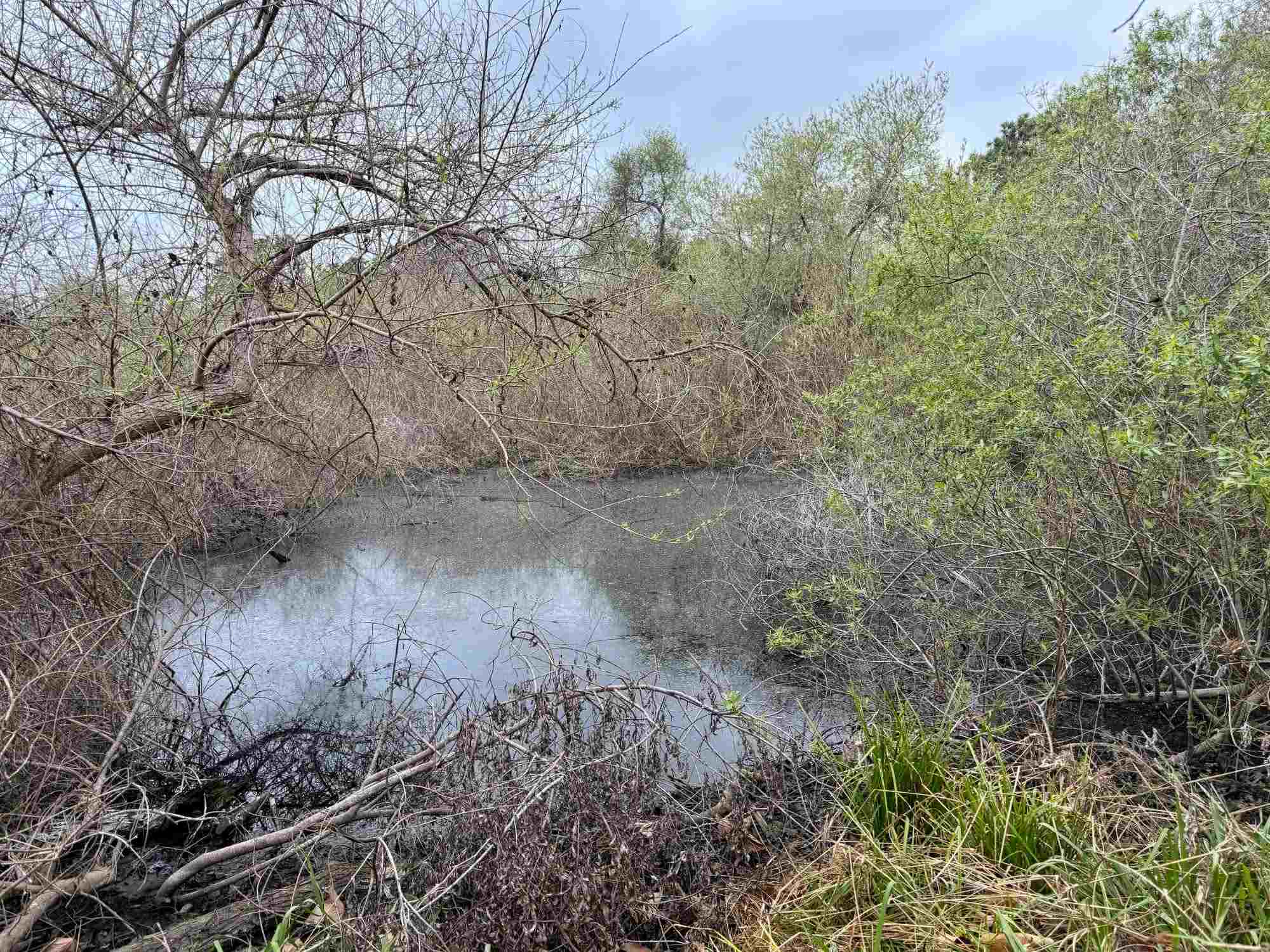
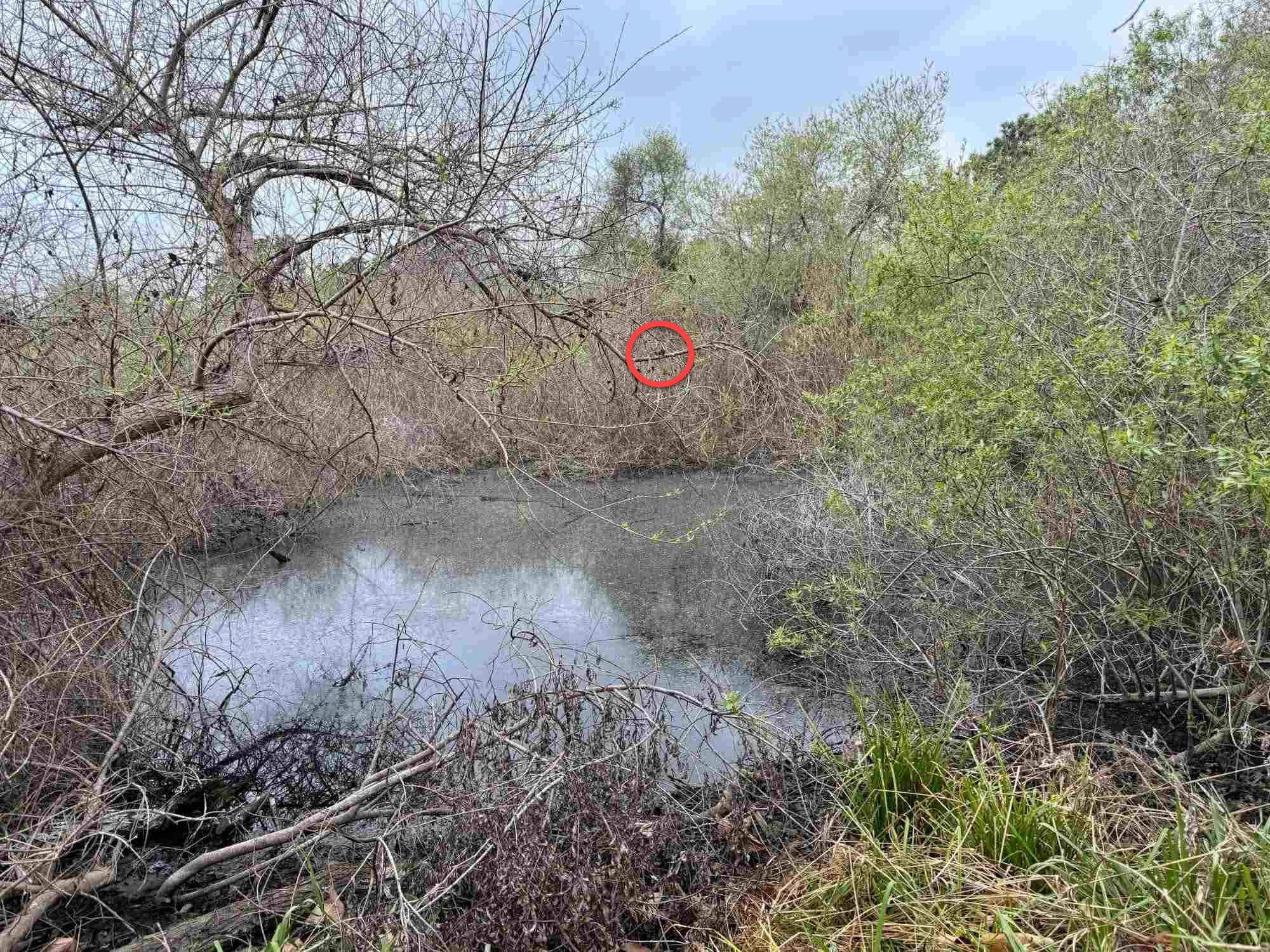
The nest was built on a horizontal branch sitting slightly over the water of this marsh. The first photo is of the marsh. The second photo shows a red circle around the nest to give you a perspective of its location.
In this sequence, the adult female gathers material and builds the nest. Once the nest has been built, she sits on the nest and will lay her two eggs.
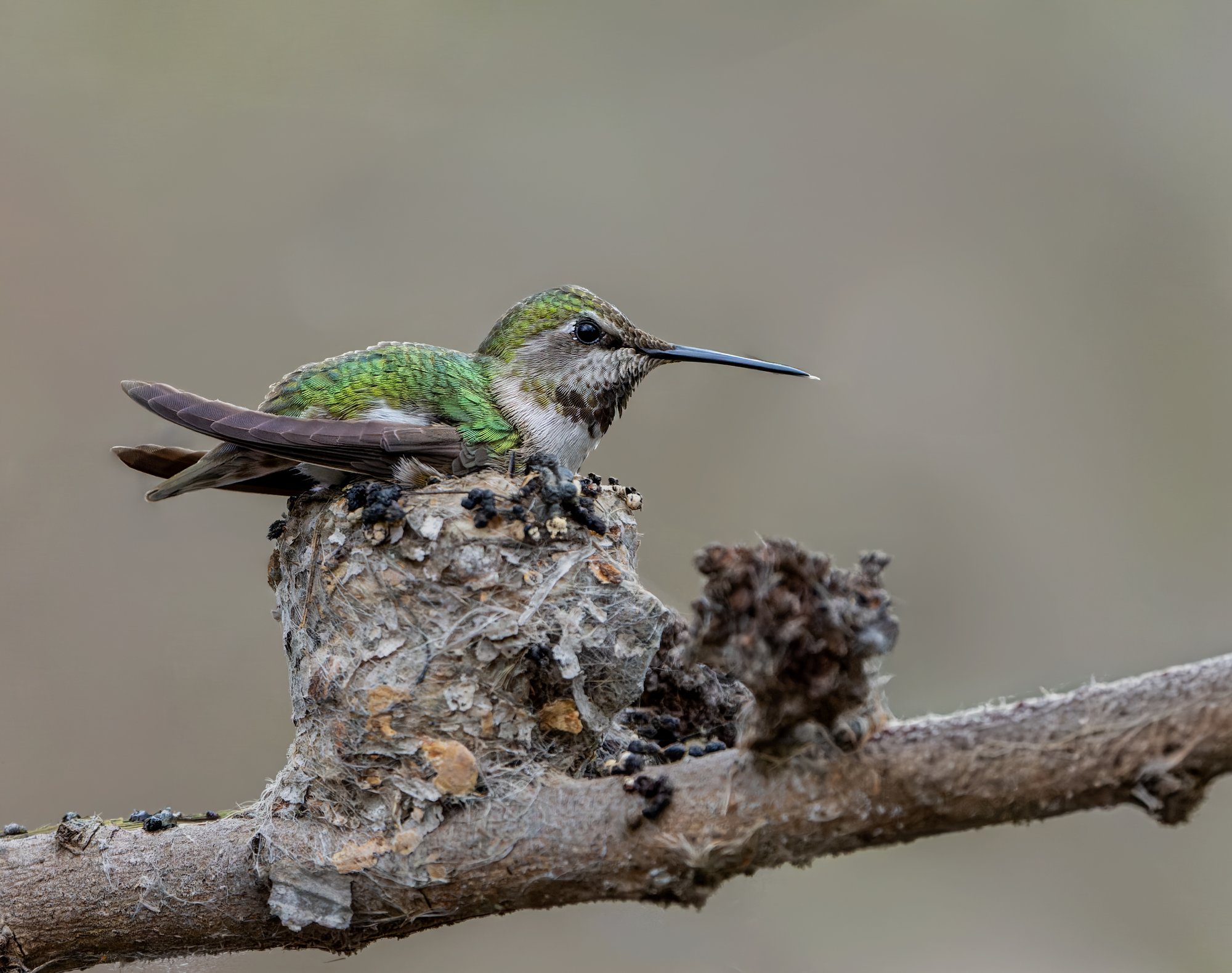
Day 1
On the first day the eggs hatched, the mother immediately began to feed the hatchlings. Only one of the chicks was visible, which you can see the mother feeding here. At this point, the hatchlings’ eyes are closed and they don’t have any feathers yet.
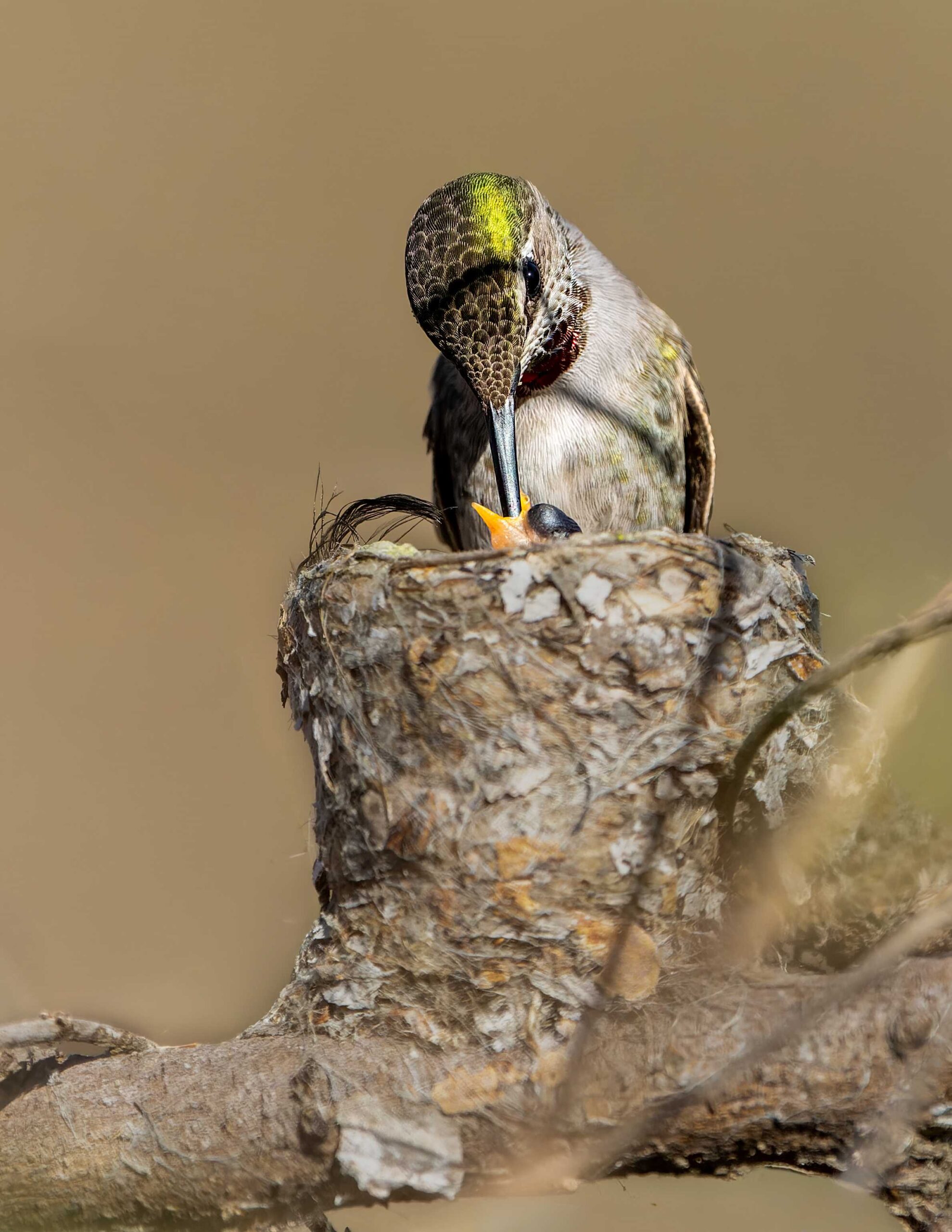
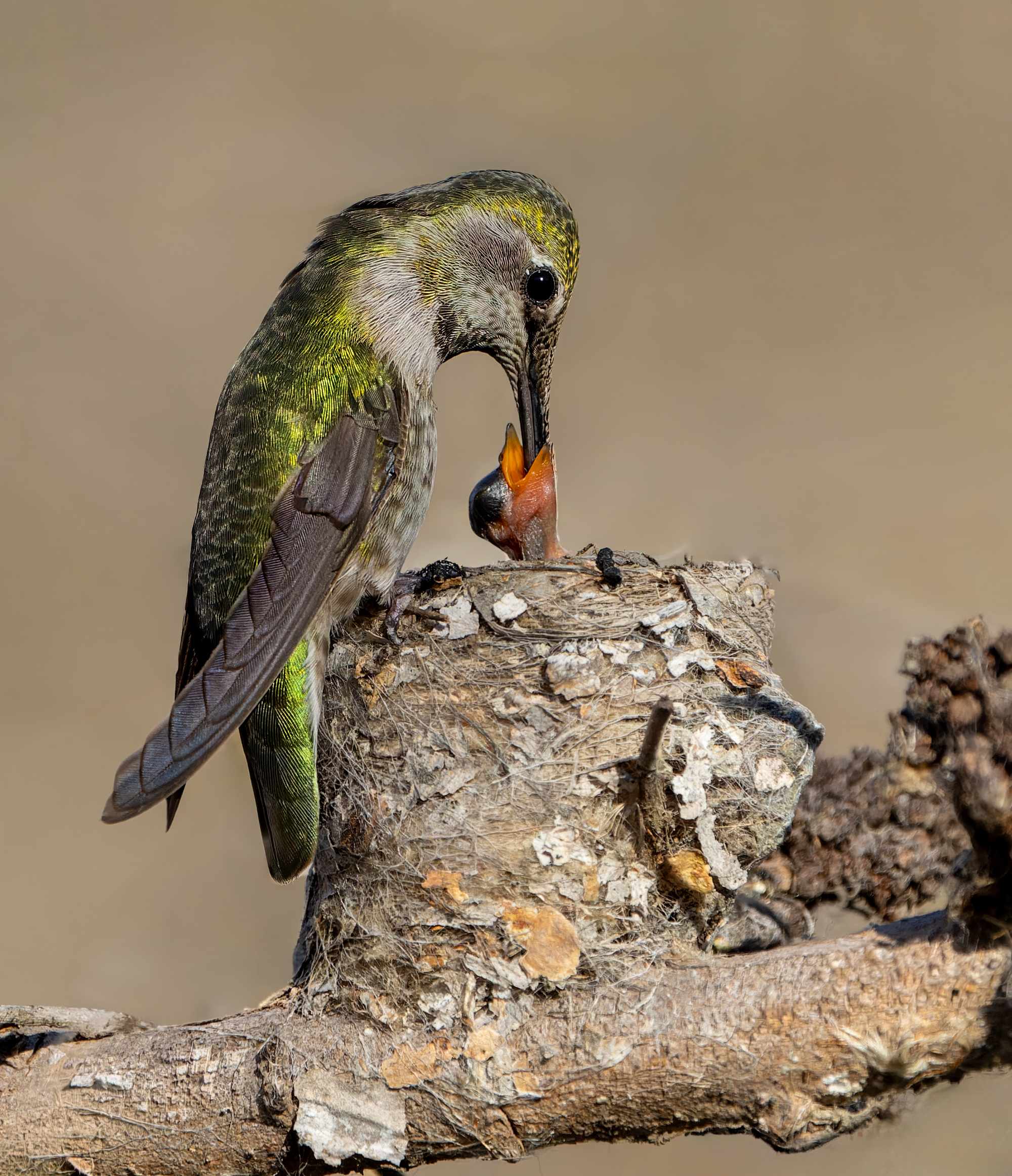
Day 4
Although their growth rate is very rapid, at this point, my plan was to return every three days so there would be noticeable differences. In this photo, the hatchling’s head has grown considerably in size and the beak has turned a deep orange. I remember thinking that only one of her eggs must have hatched, as there seems to be only one chick.
Day 6
Heavy rain was predicted for Day 7, which would have been three days since my previous visit, so I came back to the lagoon two days later, which was Day 6. Now, for the first time, a second hatchling’s head appeared! The hatchlings’ eyes are still closed and no feathers have formed yet.
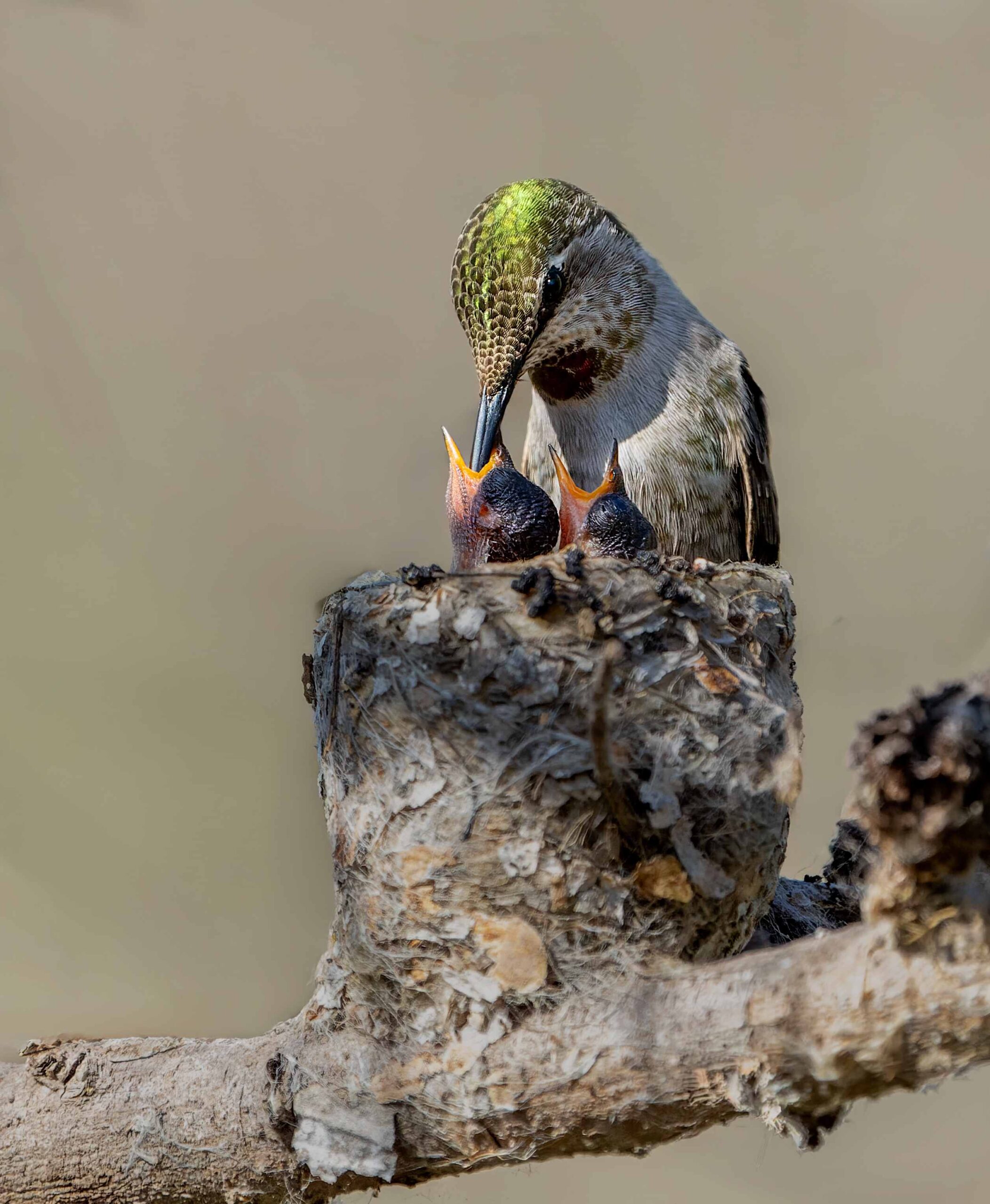
Day 10
Mom arrives at the nest with a drop of nectar on her beak. The chicks pop up immediately and she begins to feed them. In the second shot, with her beak partially open, you can see the slurry of nectar and bugs the mother is depositing down the chick’s throat.
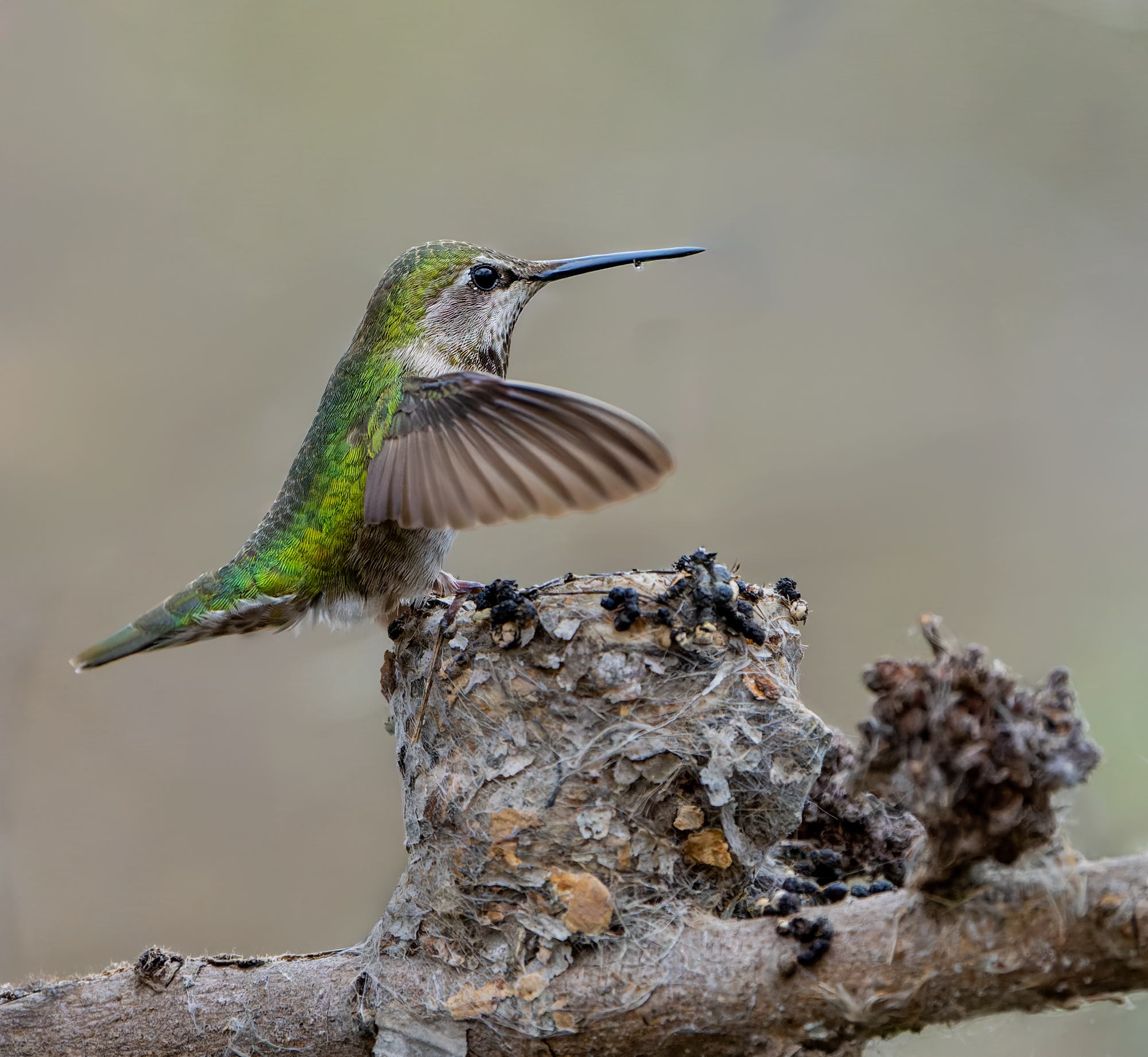
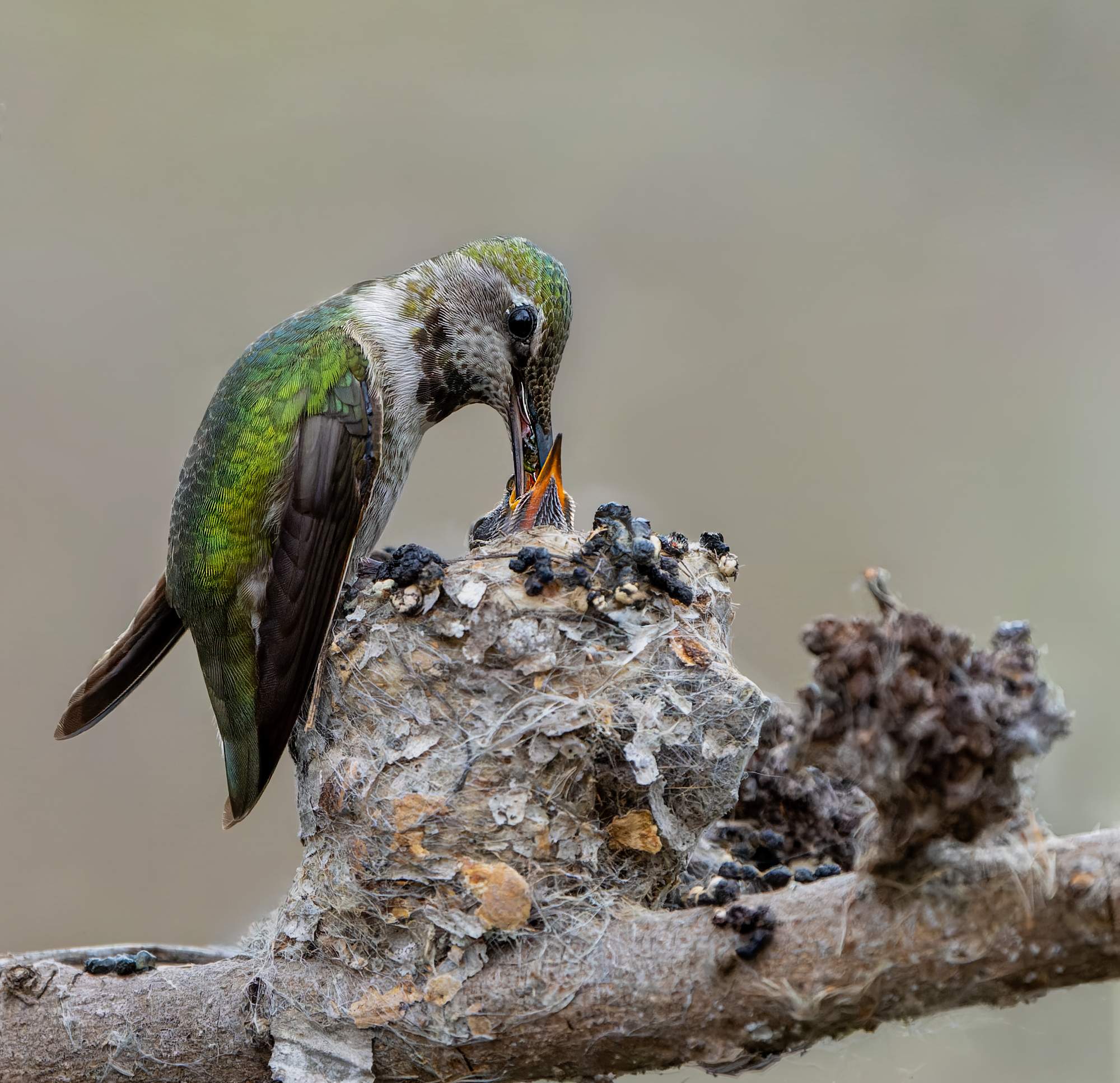
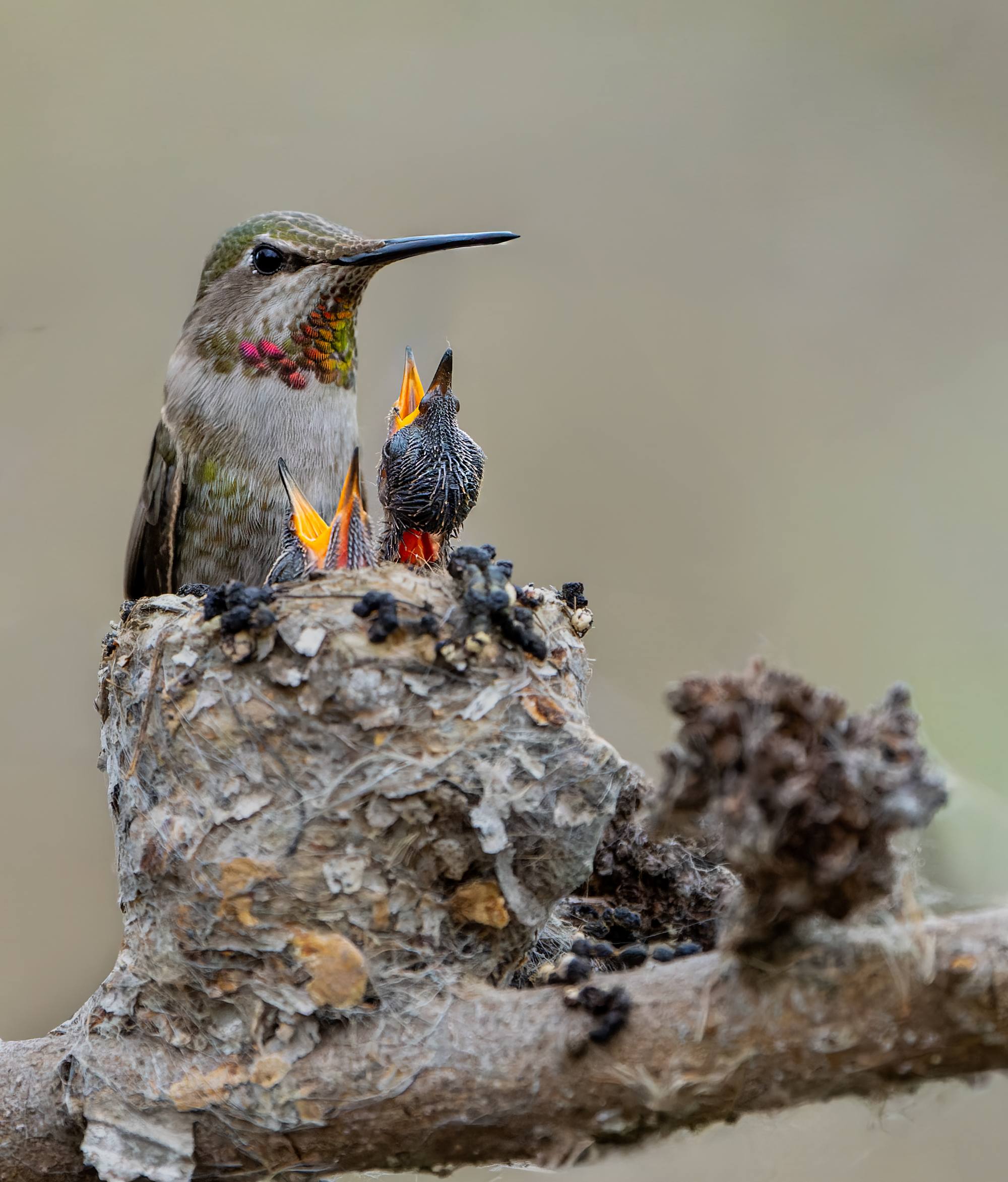
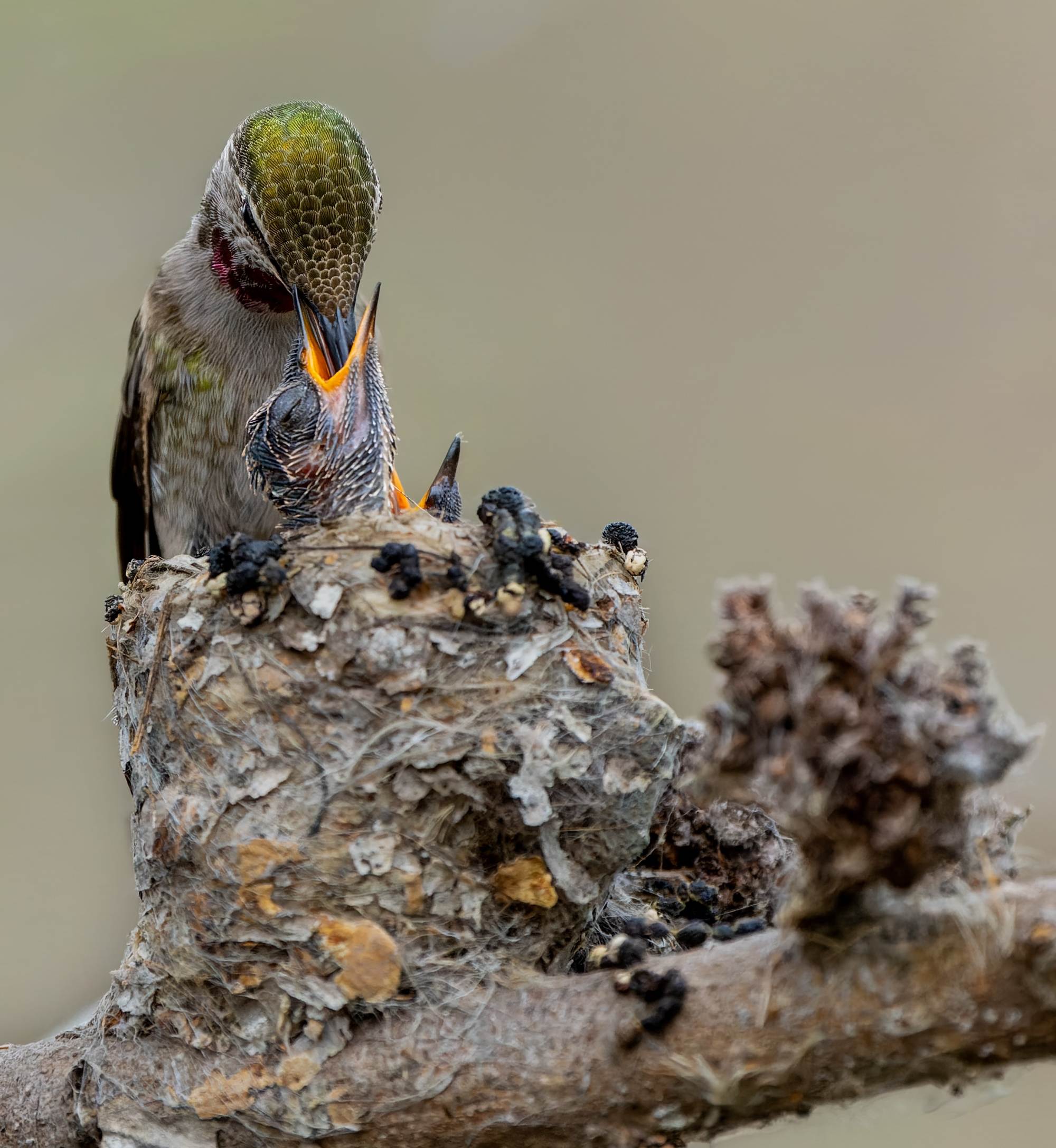
In the next shot, you can see that pin feathers have started to form on the chicks’ heads. And in the following shot, it’s amazing that after only 10 days, the largest chick’s head is nearly as big as its mother’s. In the last shot, now that the chicks are fed, mom leaves to collect more nectar and insects.
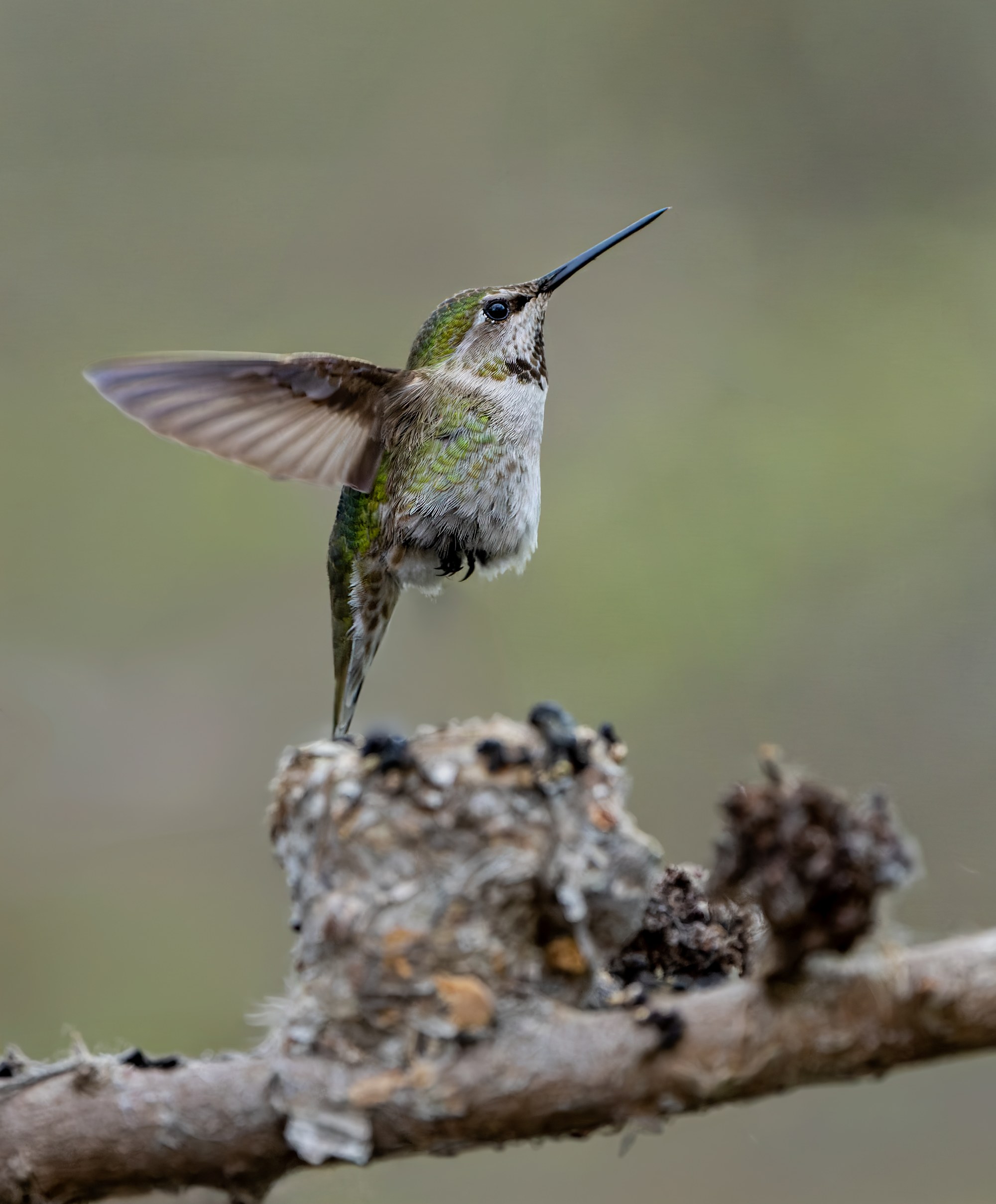
Day 12
In the first photo, mom comes in for a landing with a new batch of slurry to feed the chicks. In the second photo, as mom feeds the chicks, you can see that this is the first day that the chicks’ eyes have opened! And the pin feathers are much more pronounced over their entire bodies, while their heads grow ever larger.
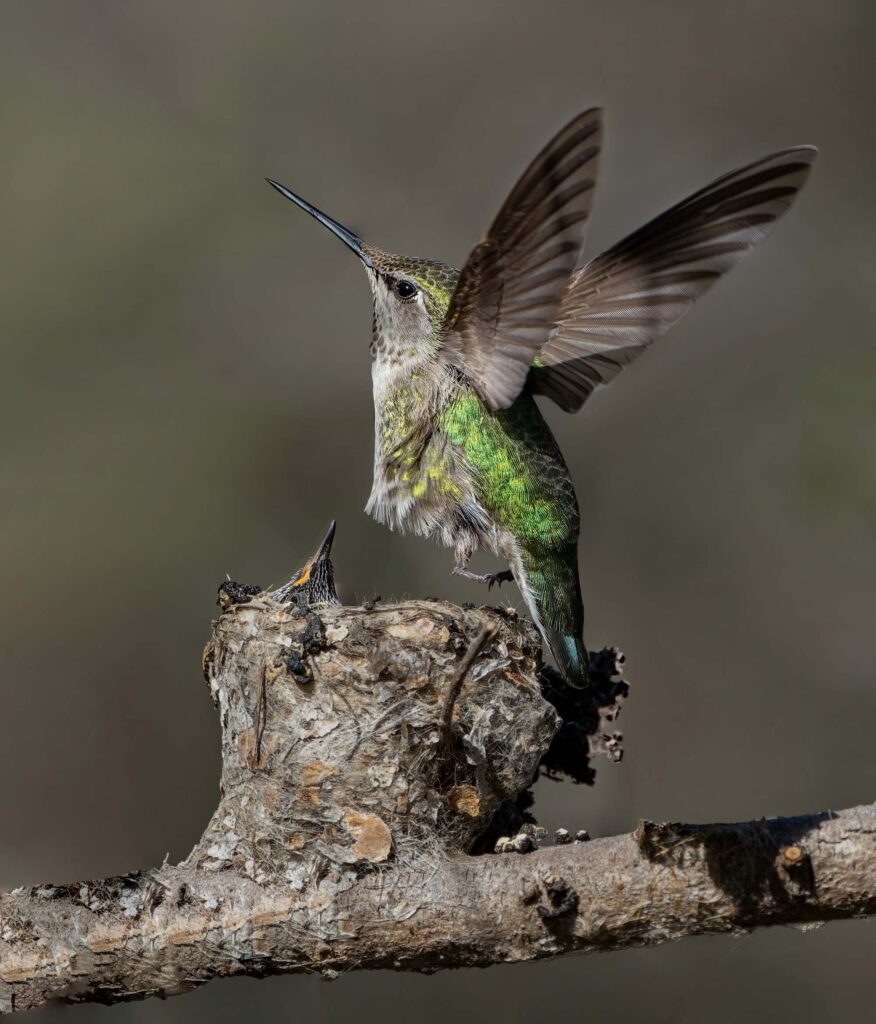
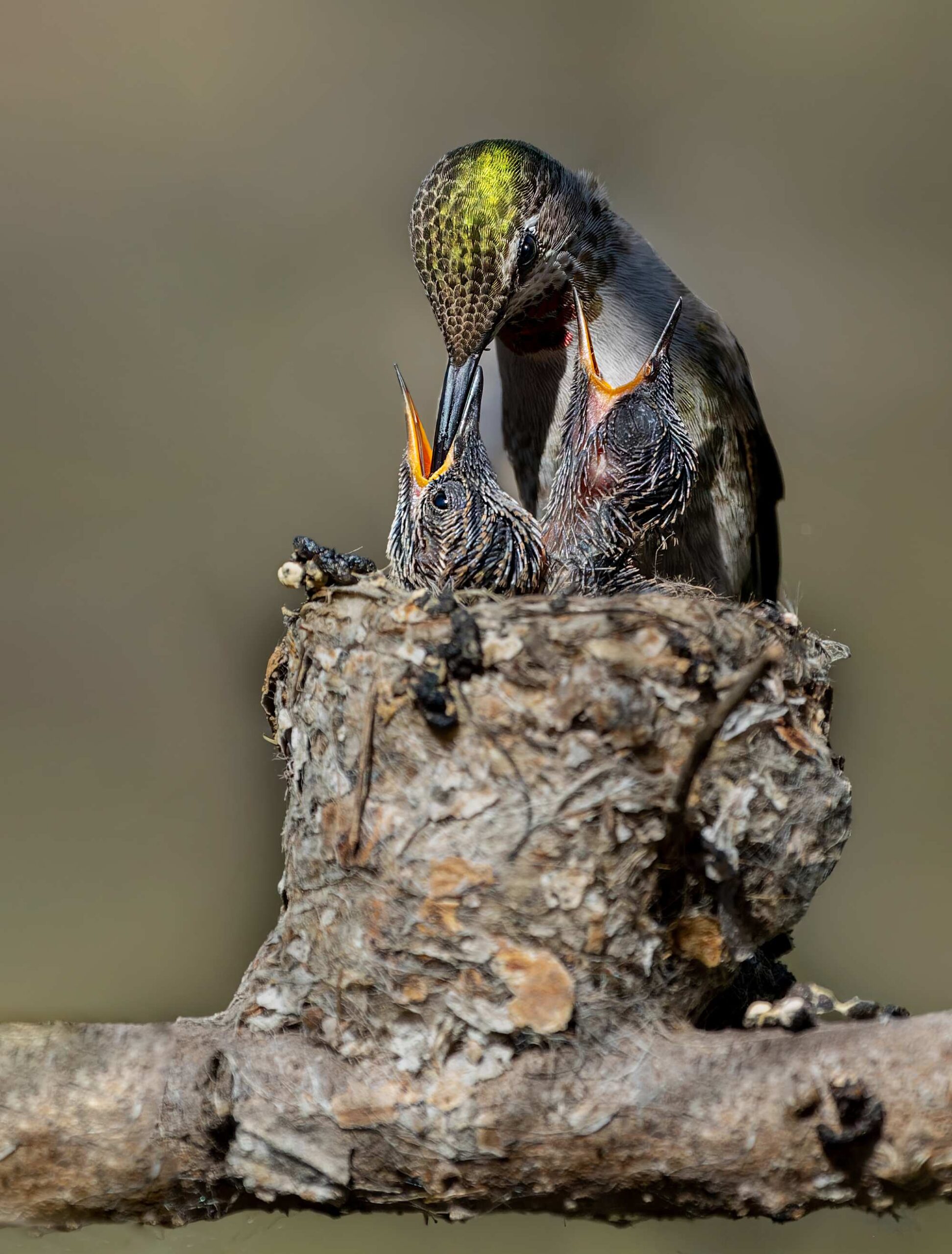
Day 13
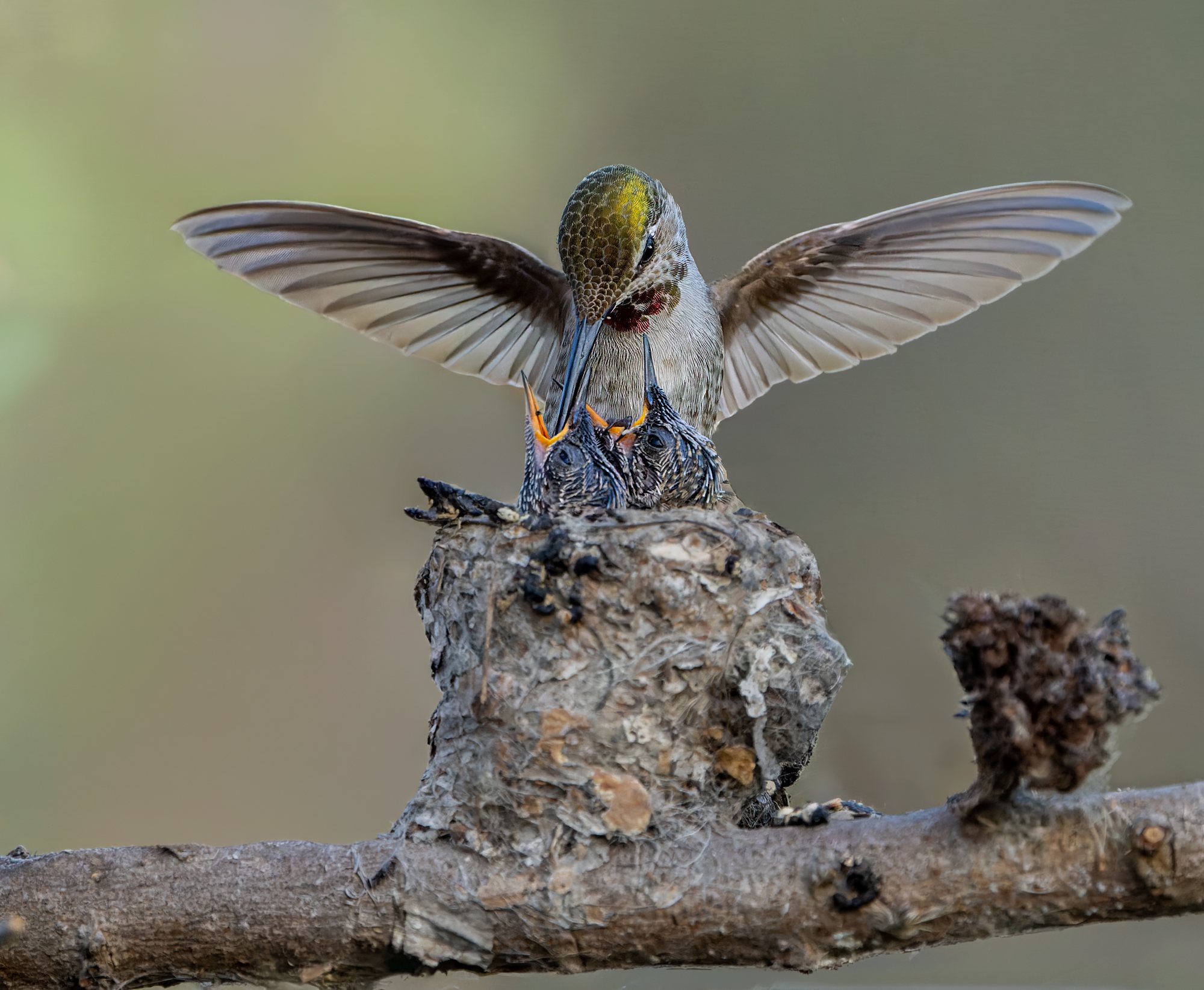
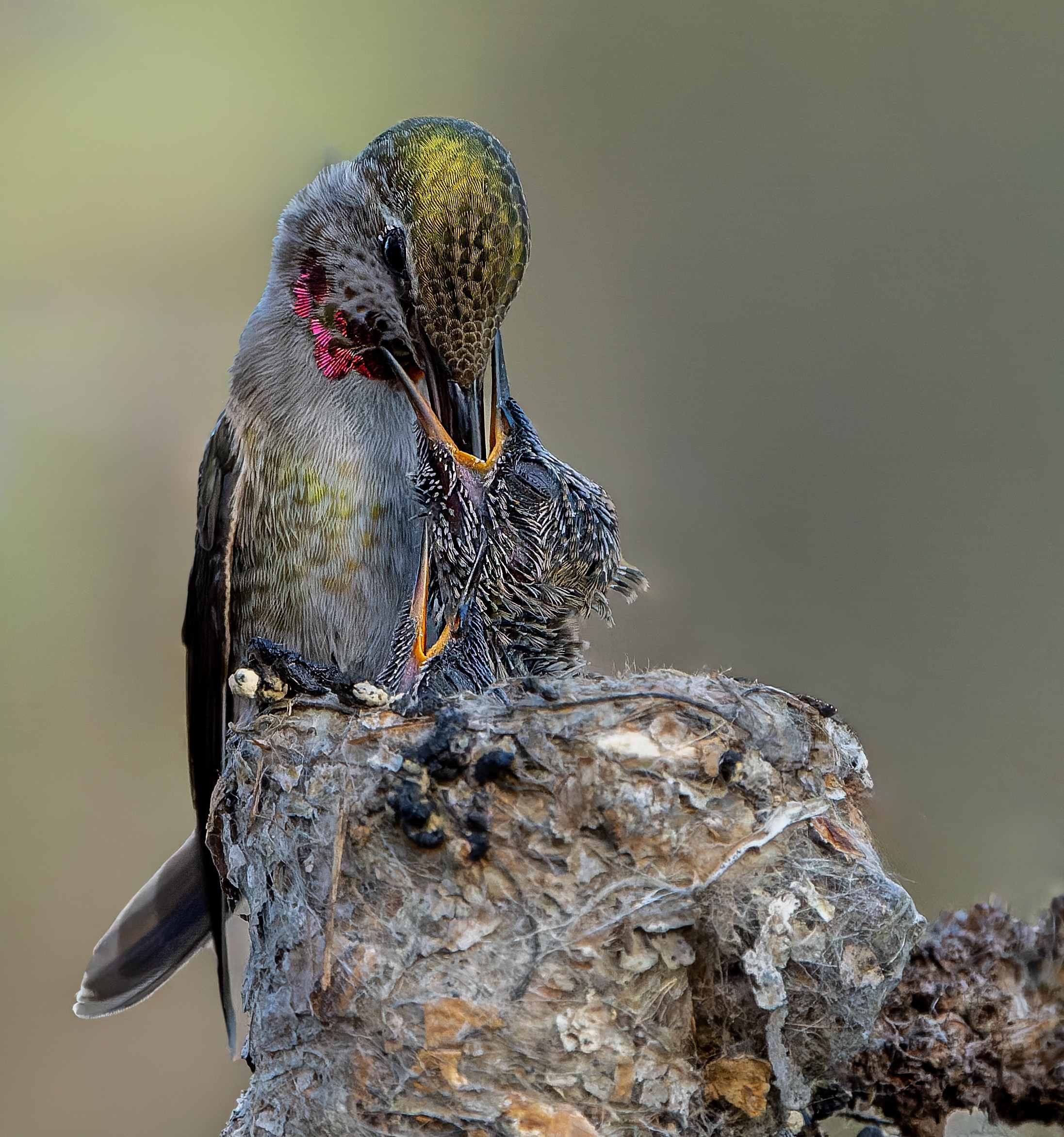
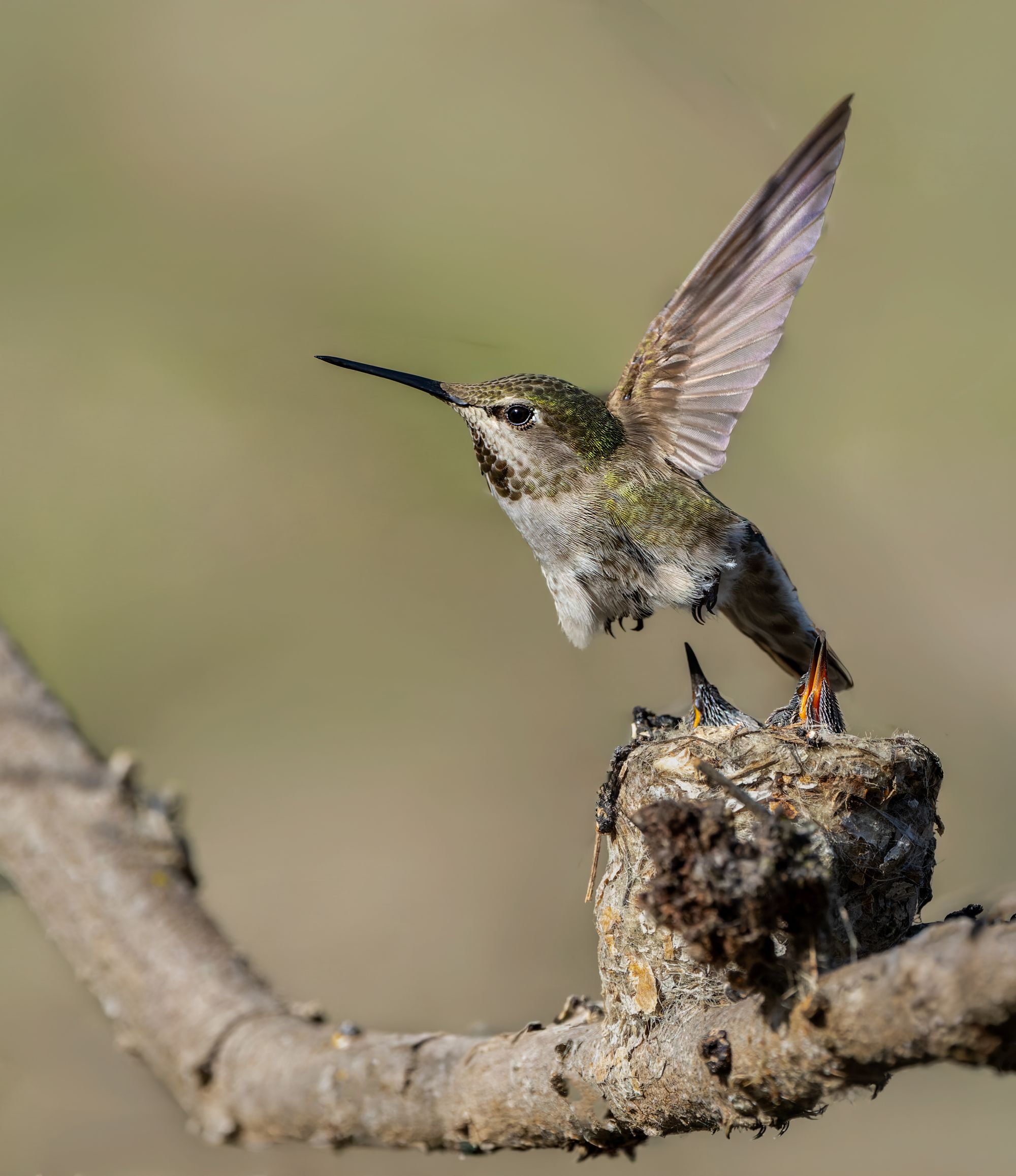
Here again, a heavy rain storm was predicted for Day 14, so I came over again on Day 13 instead. There is not much change in the chicks from the previous day, but you can see a full sequence of mom arriving at the nest, feeding the chicks, and then departing for the ever continuous hunting of bugs and gathering nectar.
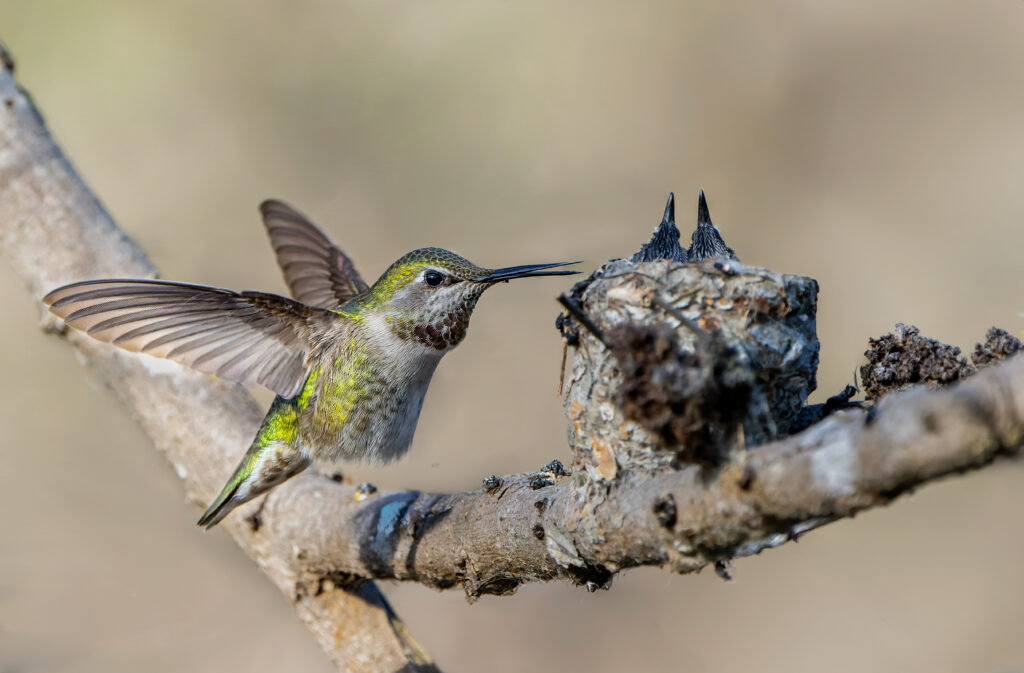
Day 16
Now, the chicks’ growth really begins to accelerate. Both chicks’ heads have reached full size on the pin feathers and have begun to change into actual feathers. In this sequence, mom lands with the next feeding, the chicks are fed, and one of the chicks practices good hygiene by pooping over the side of the nest, rather than in it.
Day 19
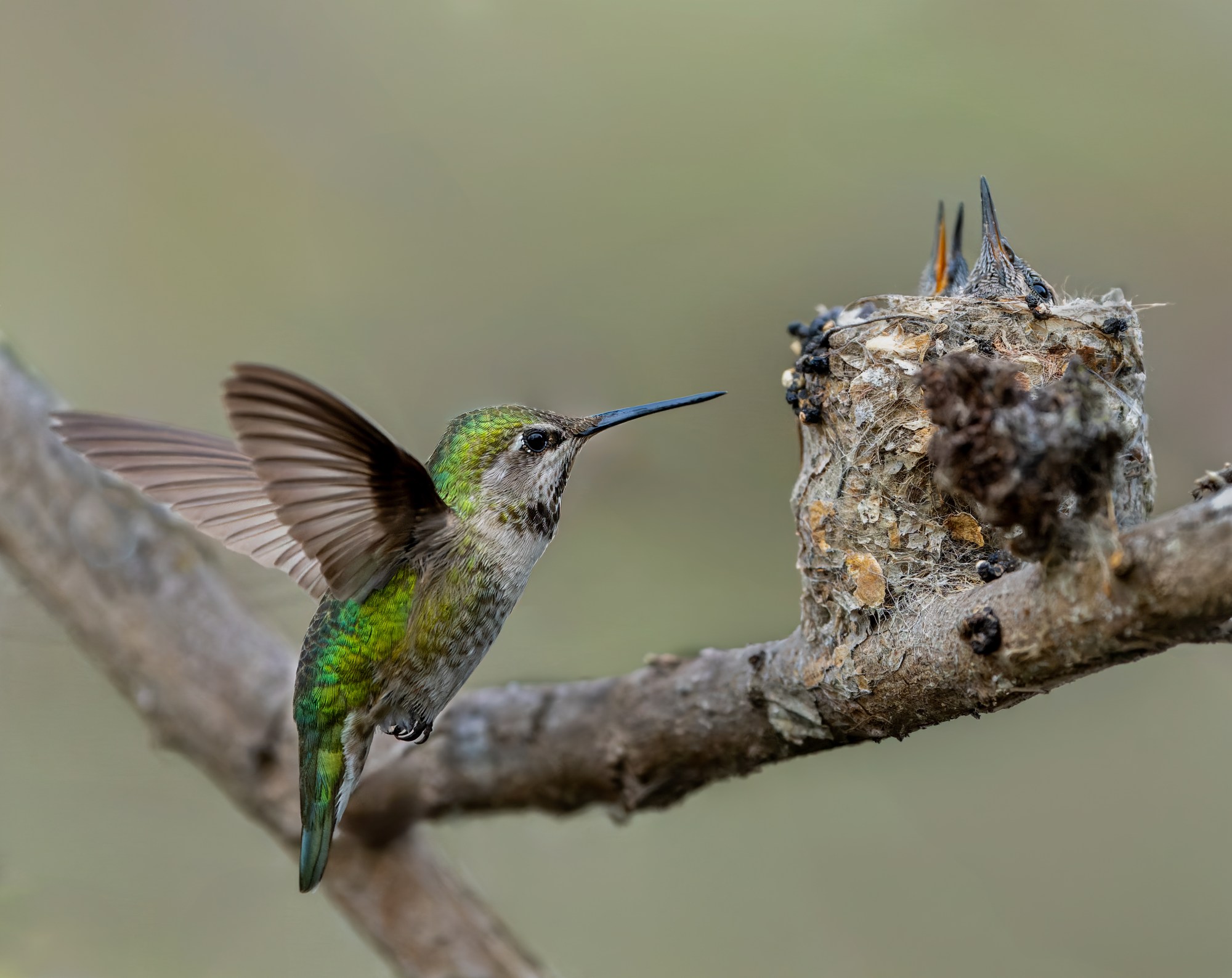
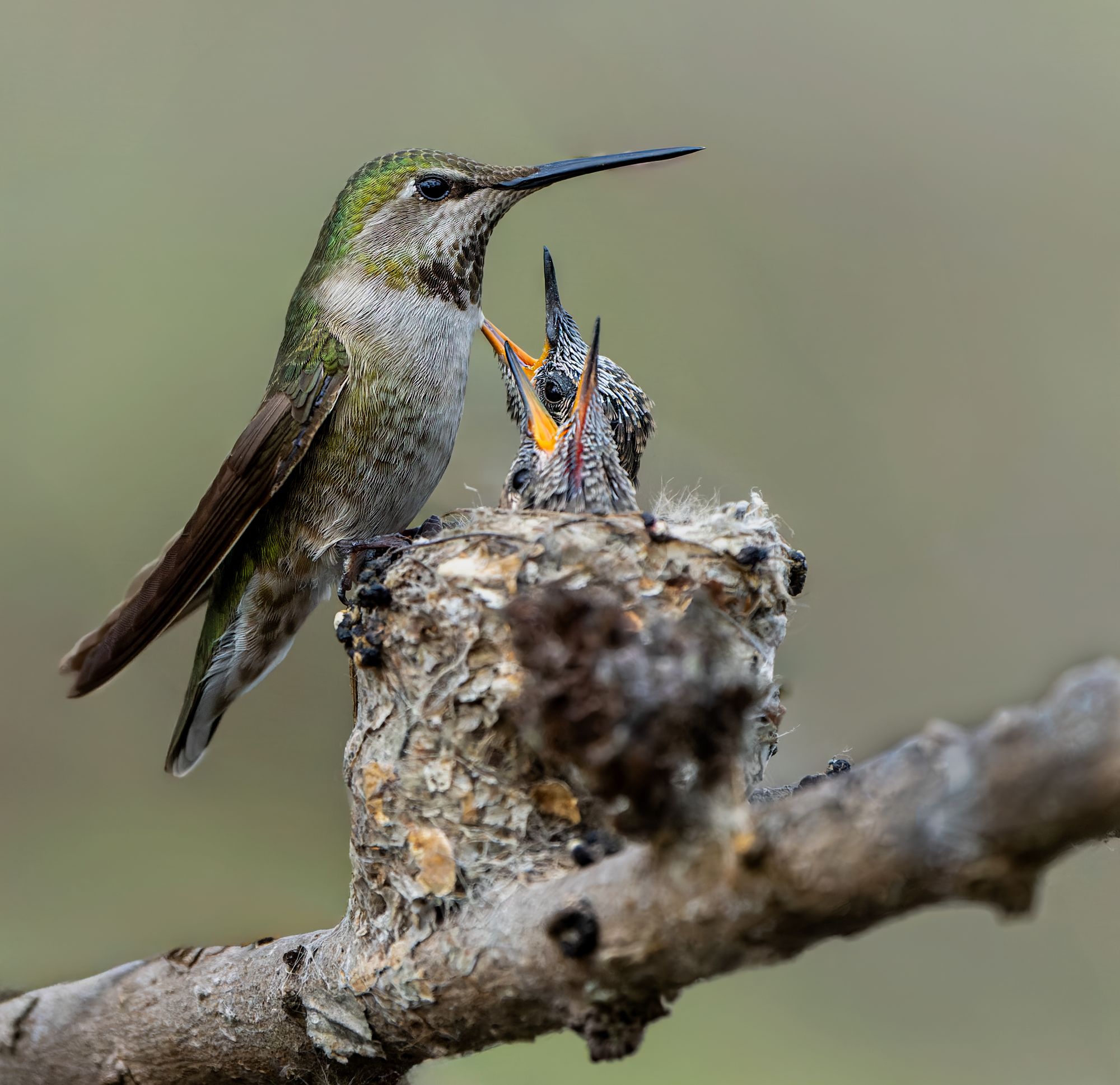
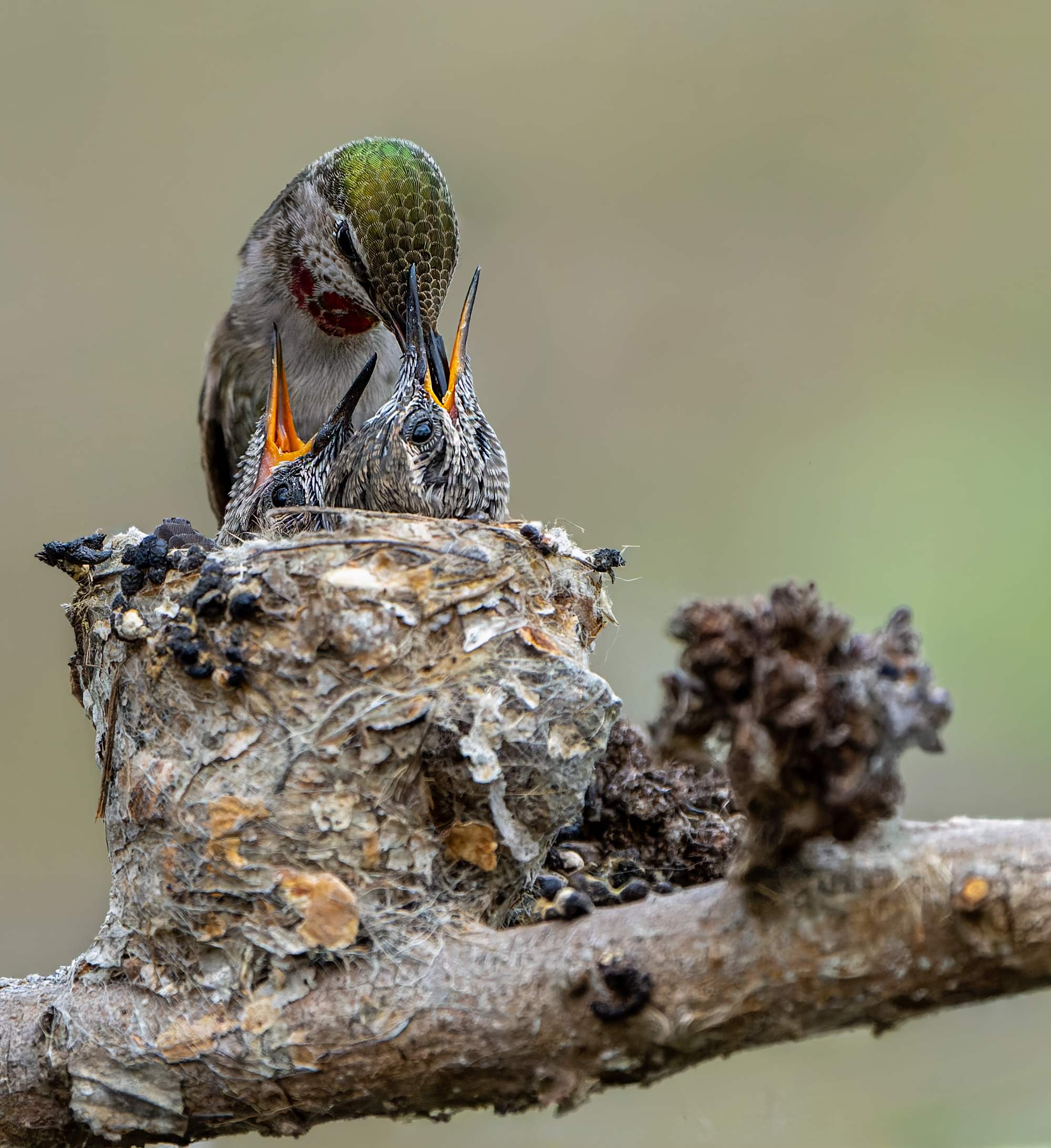
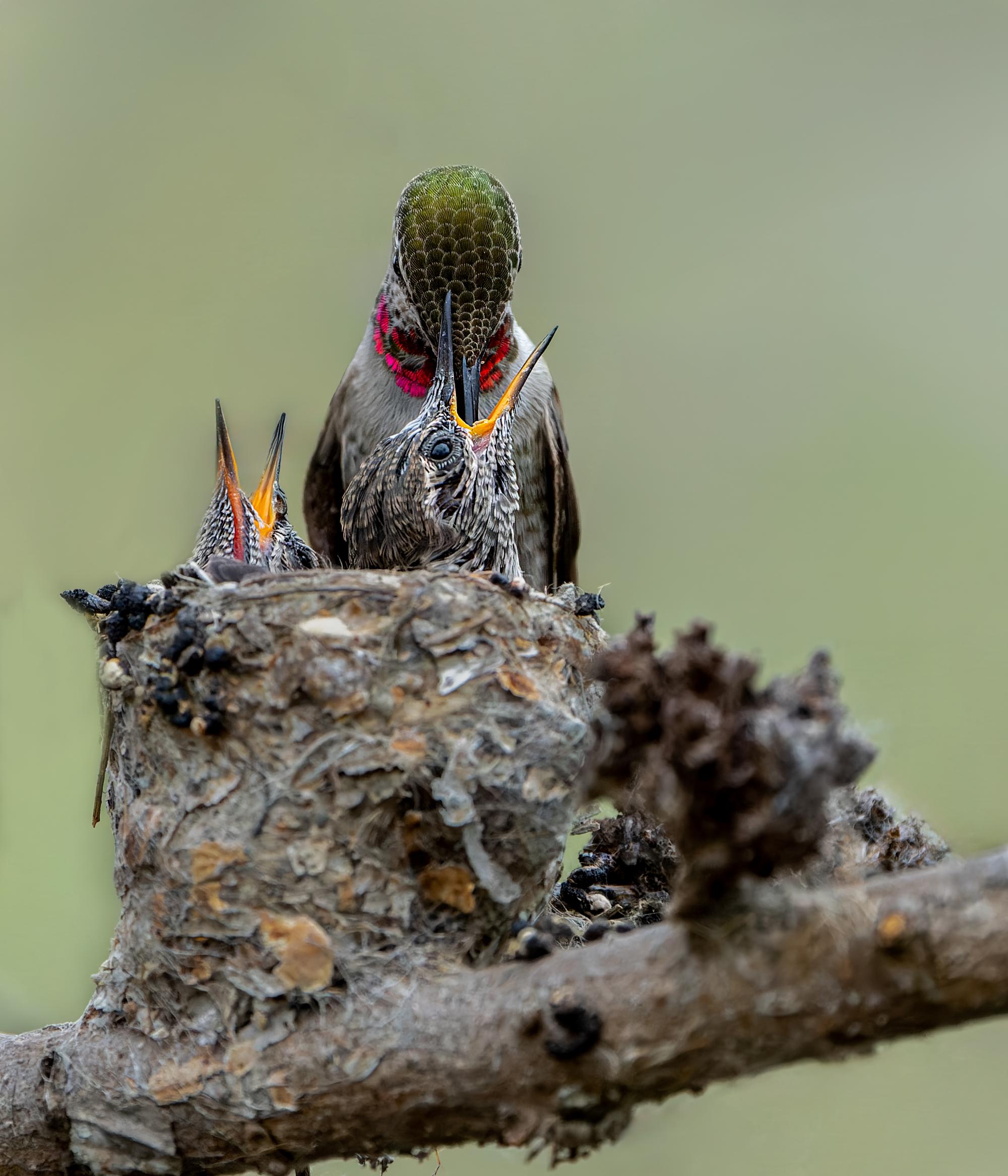
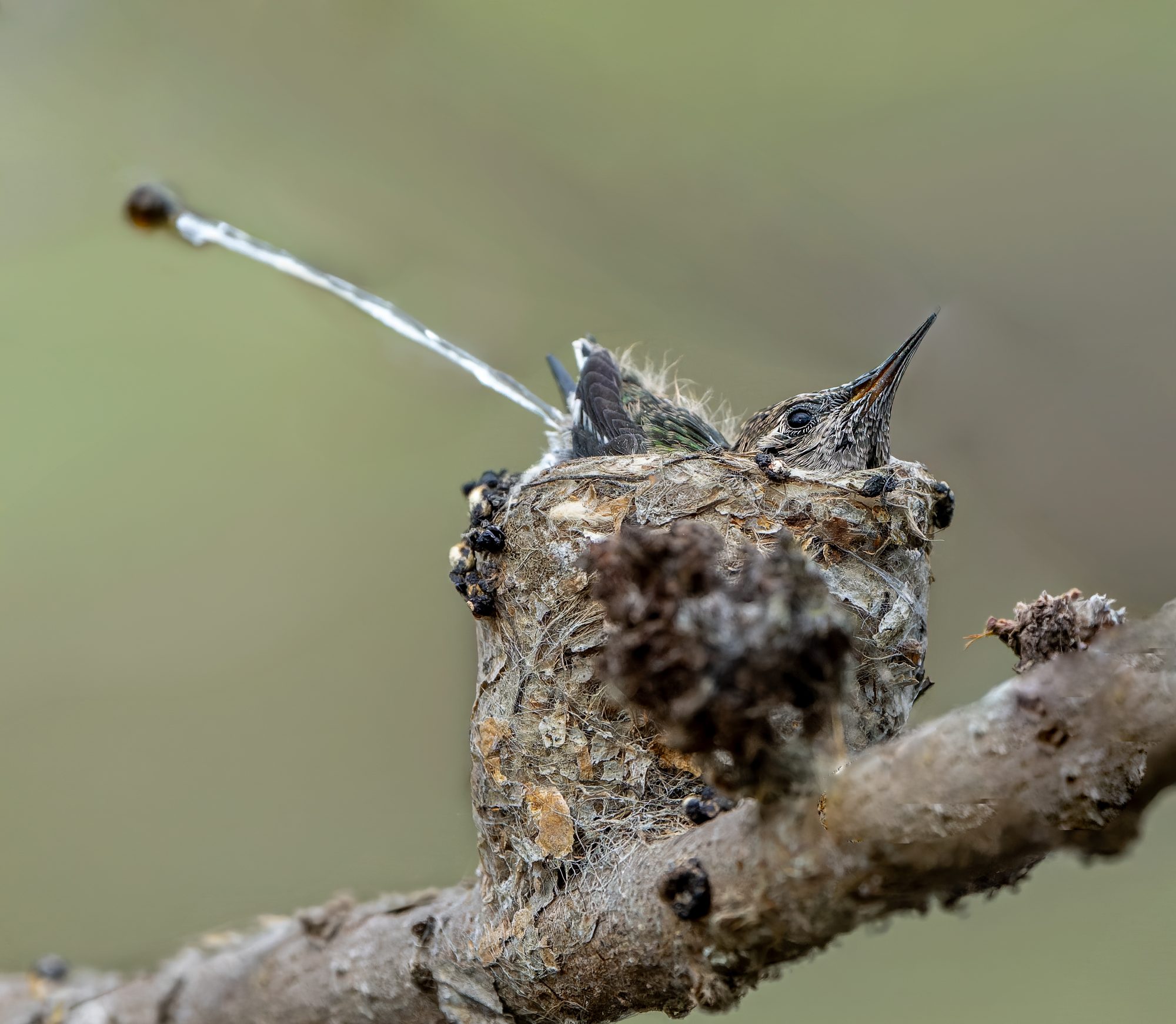
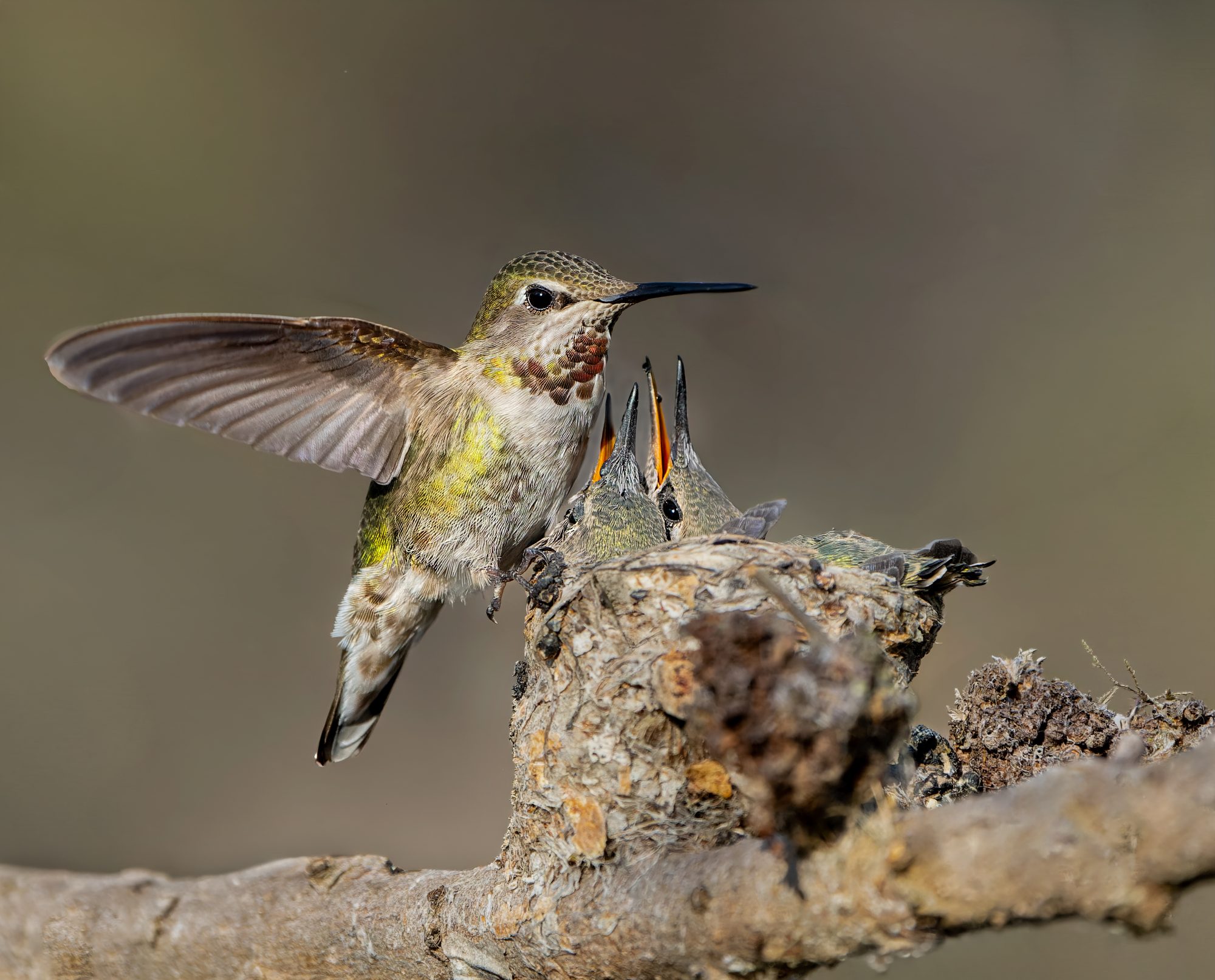
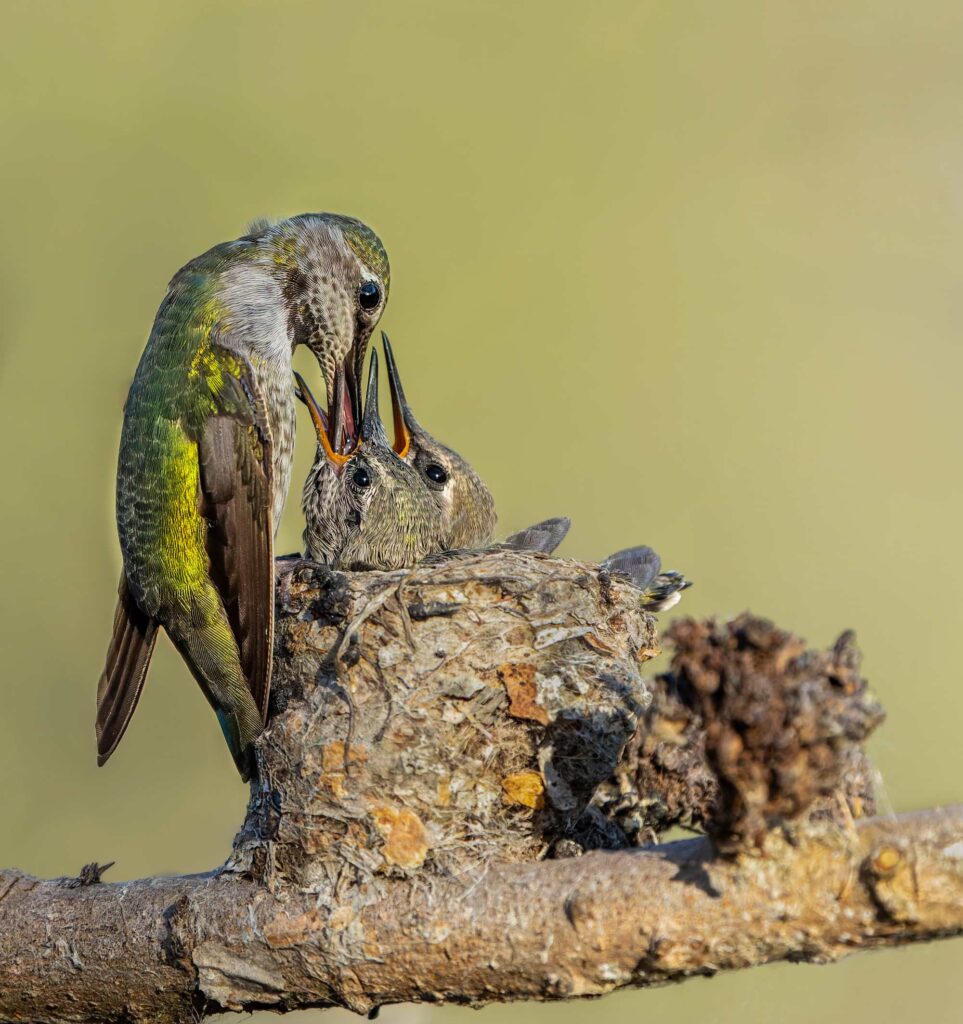
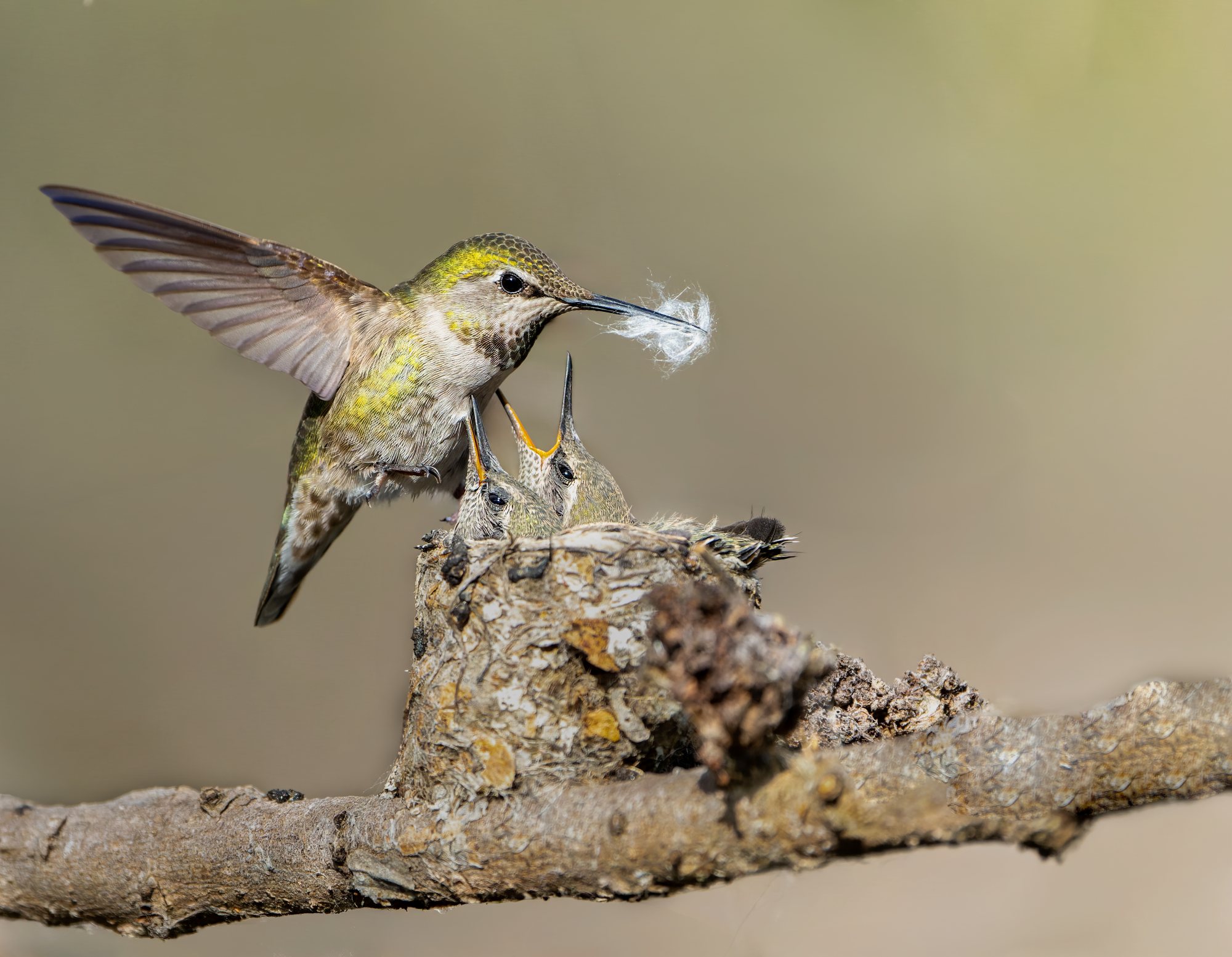
Day 19 is probably the largest growth spurt. Mom lands with a feeding and you can see that the feathers on both chicks’ heads have fully filled in and have the green color characteristic of Anna’s Hummingbirds. In the final shot, mom returns with building material to bolster the nest.
Day 21
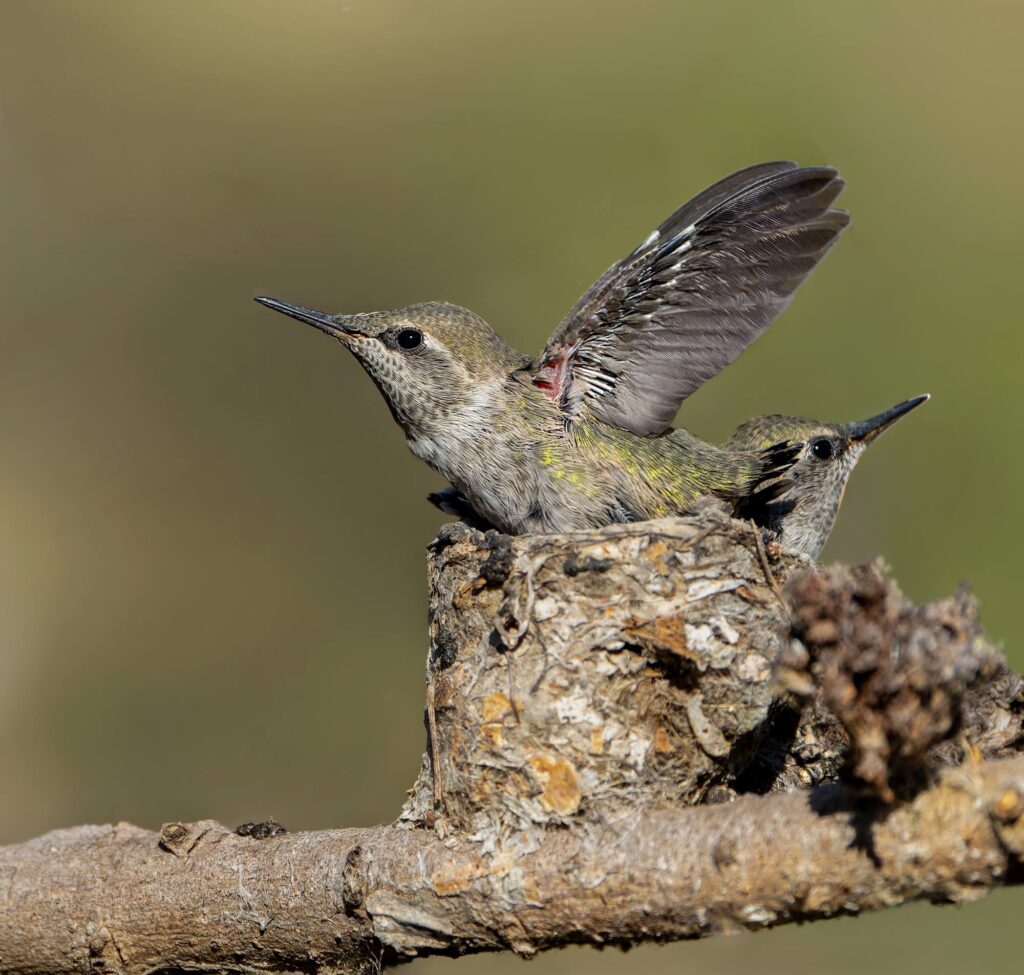
In the final two shots, my excitement peaked when the largest chick began to stretch and flap its wings. This is done in order to strengthen the wing muscles in preparation for flight. If you look at the base of the wing where it connects with the body, you can see some remaining pink flesh, which indicates that the feathers have not fully filled in and actual flight isn’t quite yet possible.
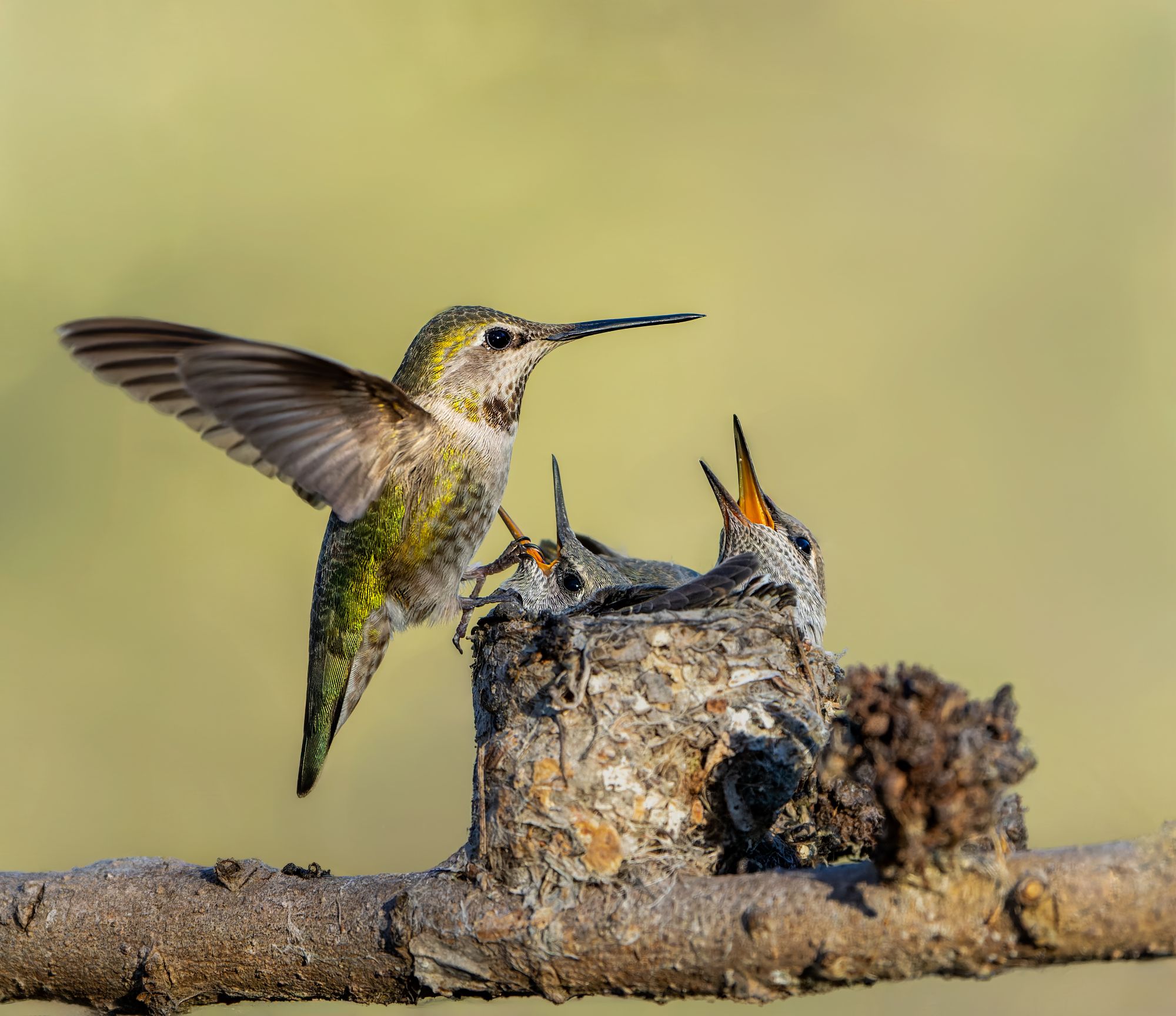
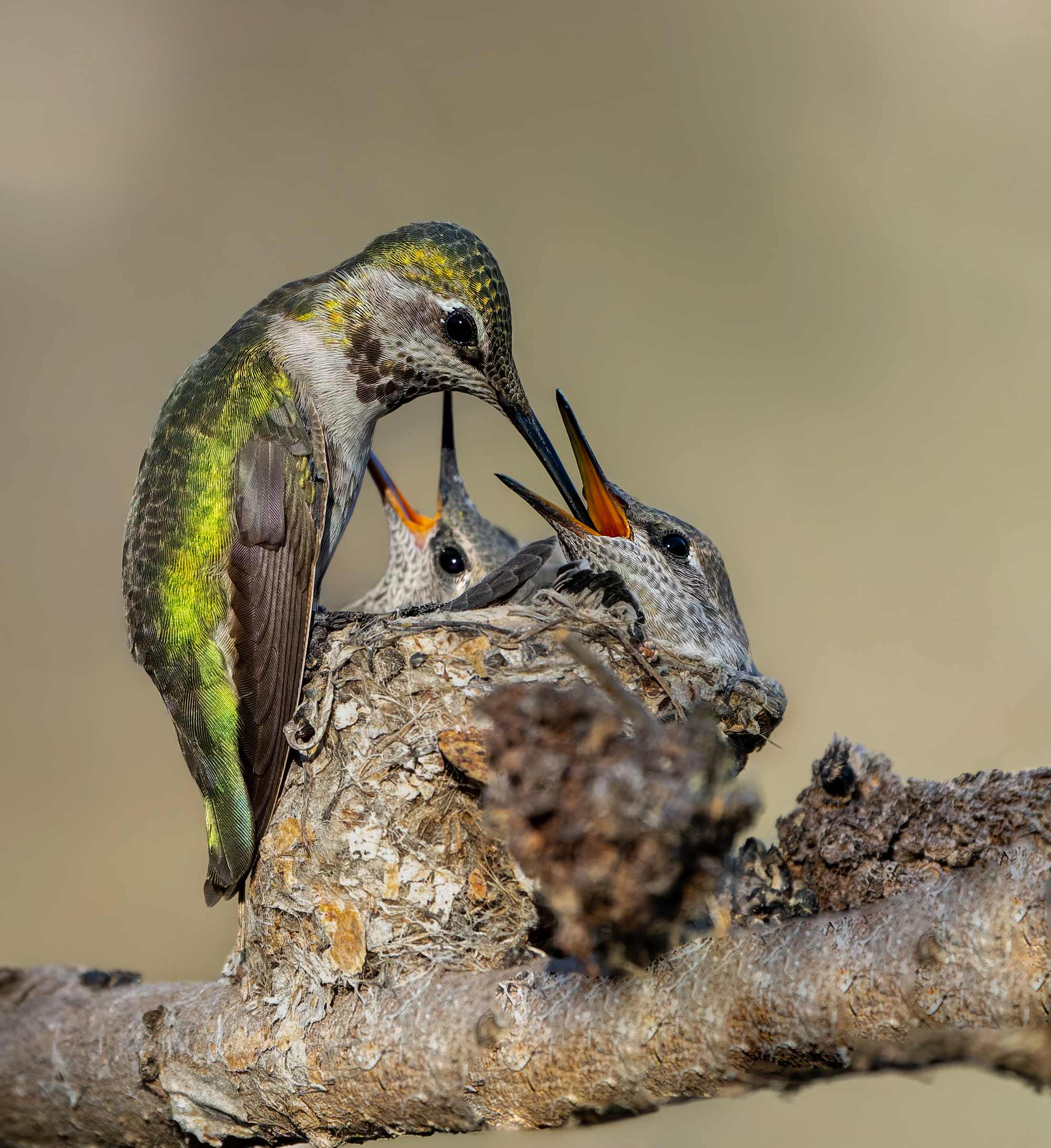
This is another exciting day and we’ve moved to a new phase! Mom lands and you can see that the chicks’ feathers are nearly completely filled in. The characteristic white streaks and grey spots of this species now show prominently on the chicks’ necks.
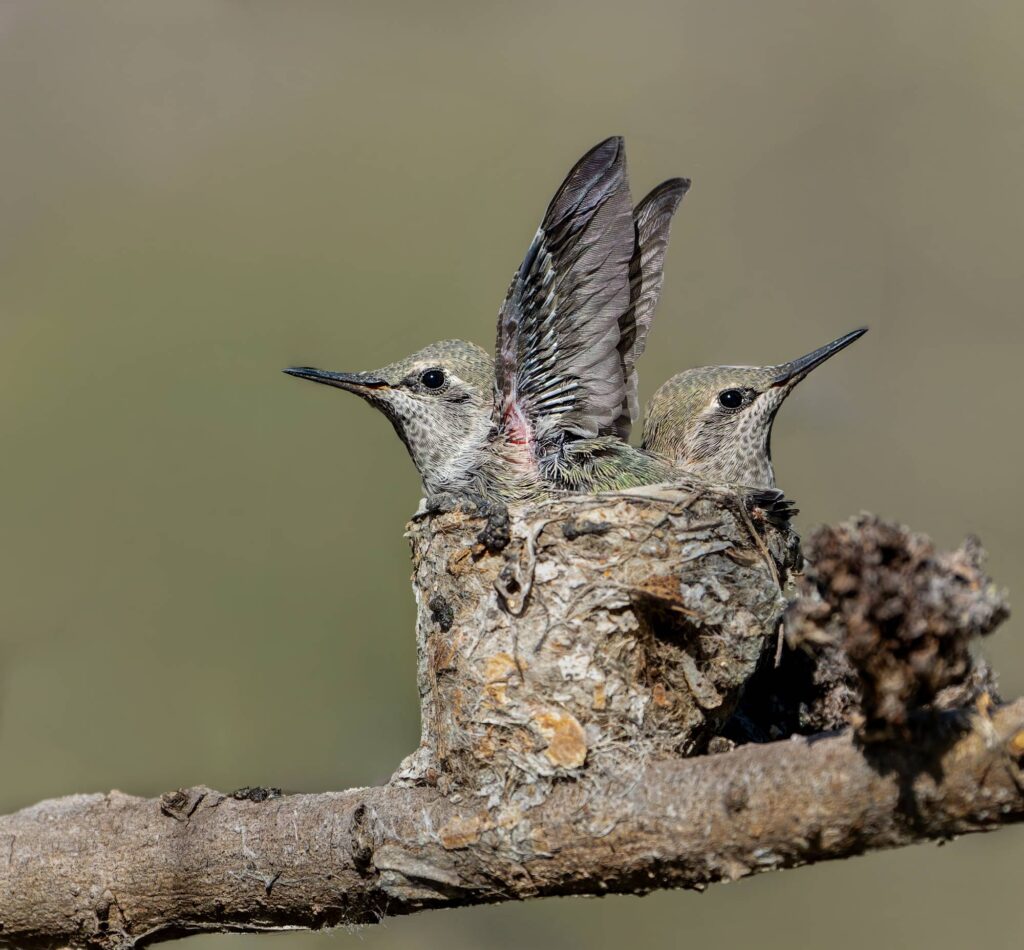
Day 22
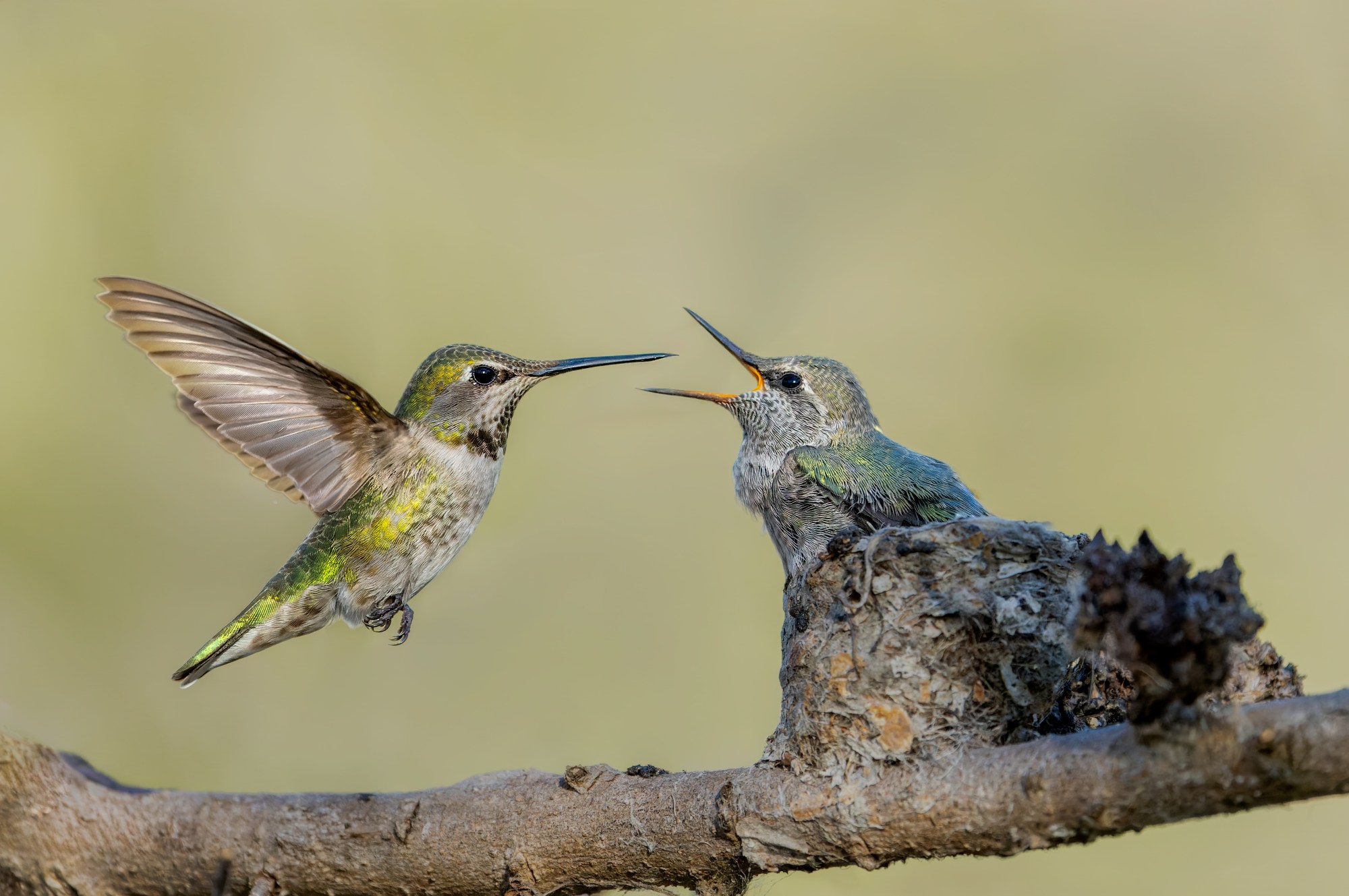
With growth accelerating at a dizzying pace, I’ve now decided to come every day until the chicks fledge, knowing that fledging typically occurs between 22 and 28 days. As the mother flies in, you can see that the chicks now look nearly identical to their parents.
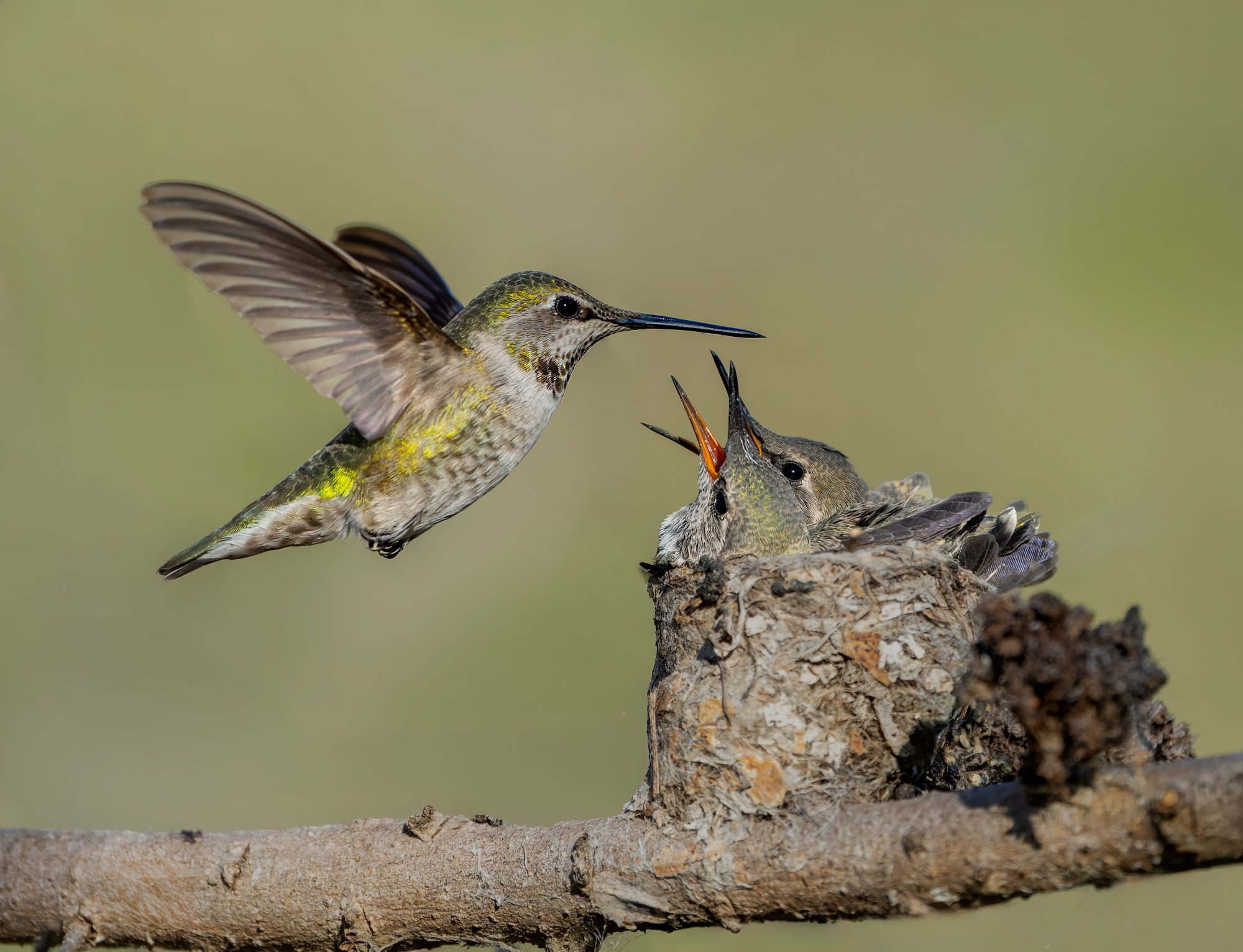
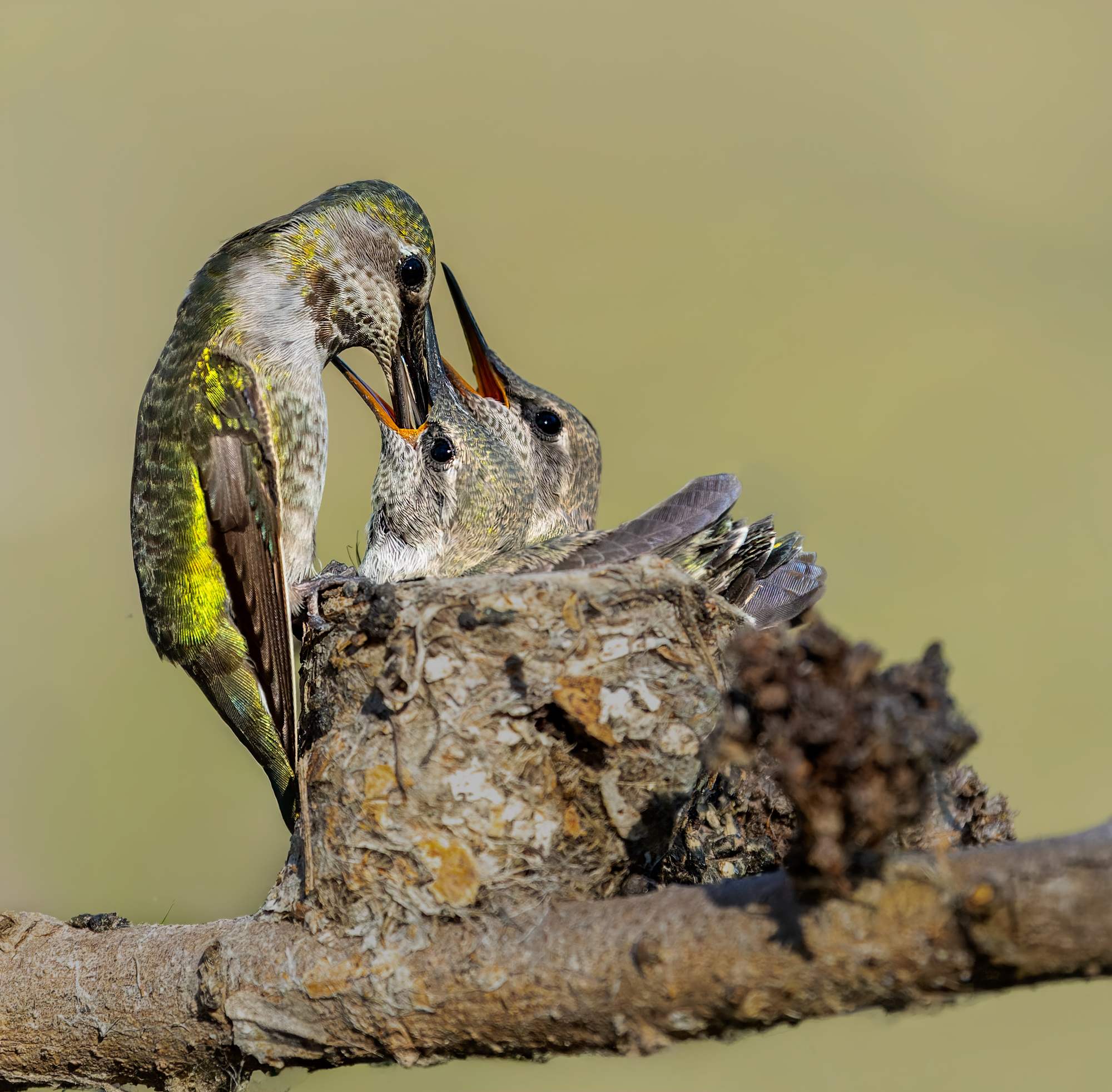
The larger chick continues to stretch and flap its wings far more frequently and for extended bursts. Then, the final photo shows it progress to the next step before actual flight, which is hopping up to the rim of the nest to vigorously stretch and flap its wings.
Day 23
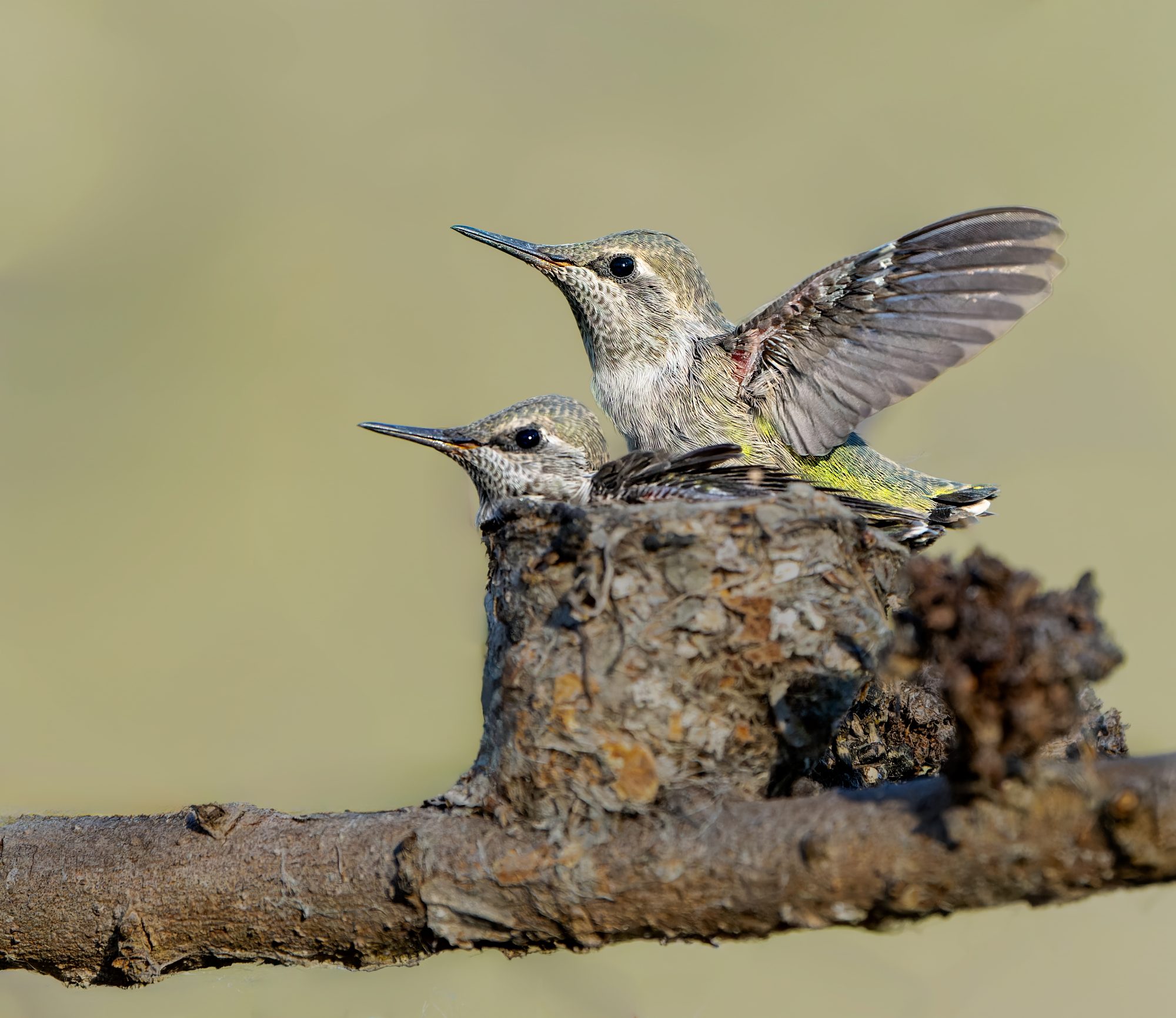
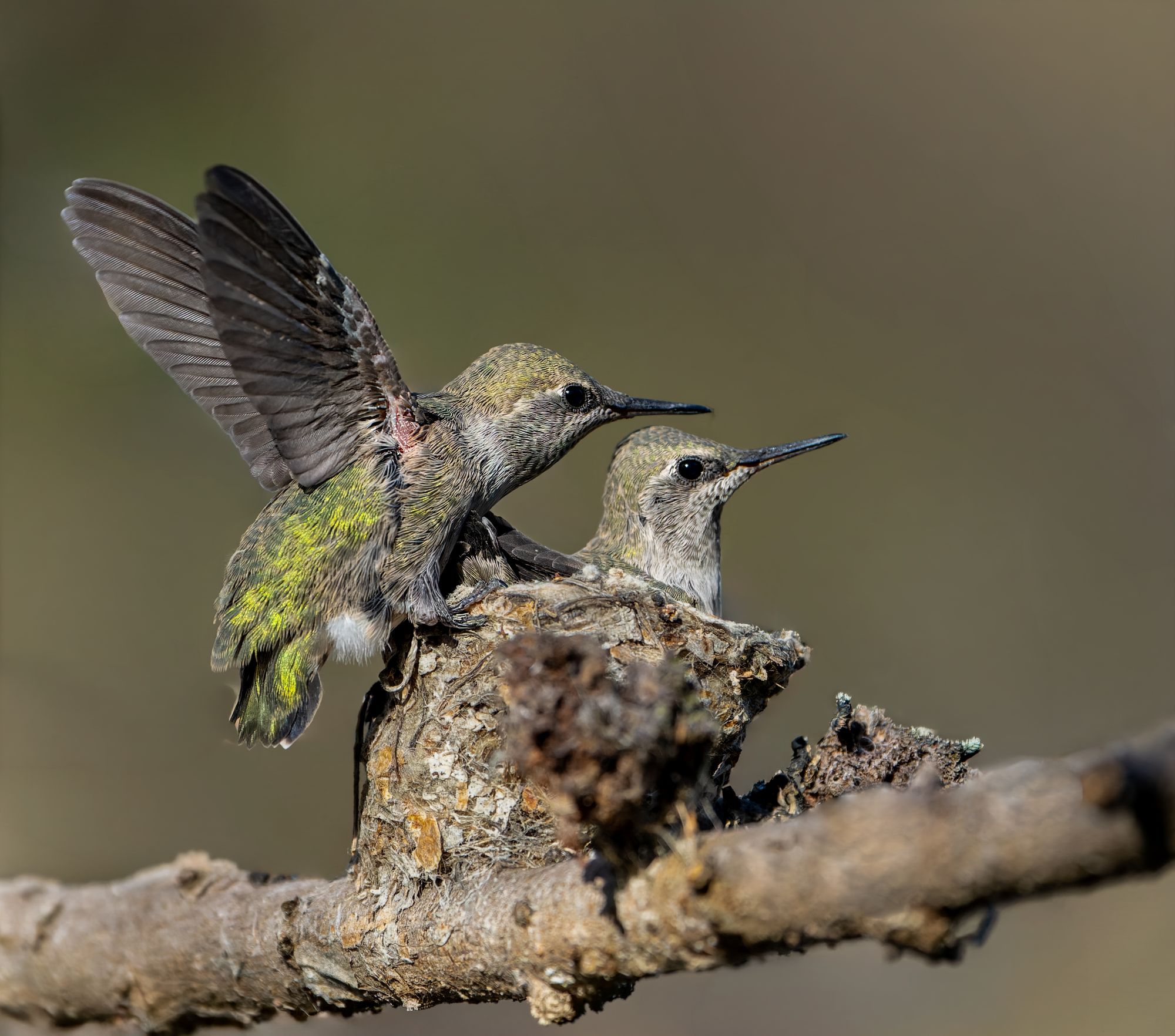
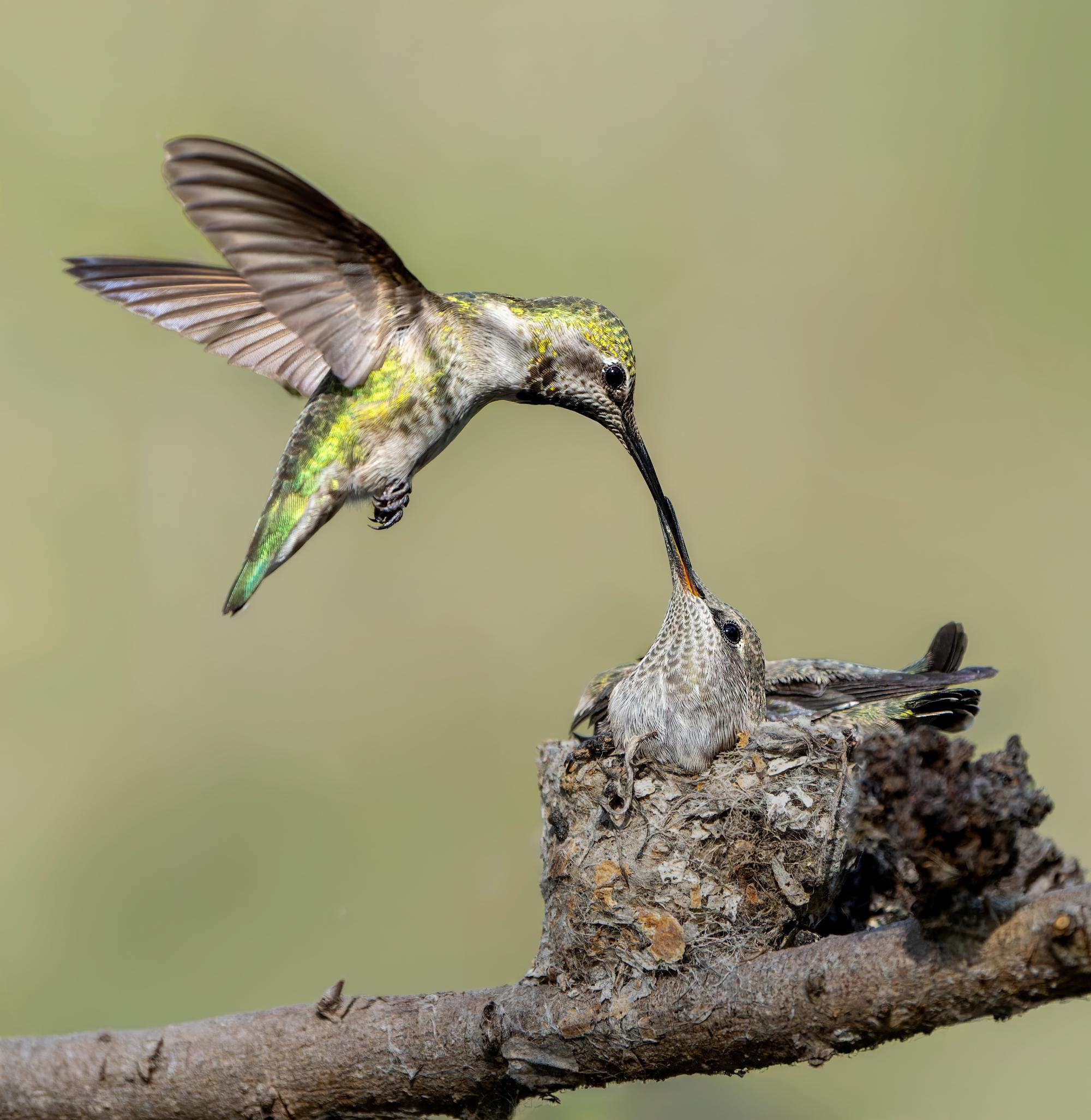
Day 23 is filled with many firsts. In the first photo, the second chick, which is the smaller of the two, now makes its first hop up to the rim of the nest. Seconds later, the larger chick makes its first flight off the nest, to a nearby tree. The photo I captured of it leaving the nest was poor as the bird in flight was obscured by its sibling in front of it.
In the next two photos, you can see another first. Now, the mother flies in and performs a mid-air feeding of the single chick left in the nest.
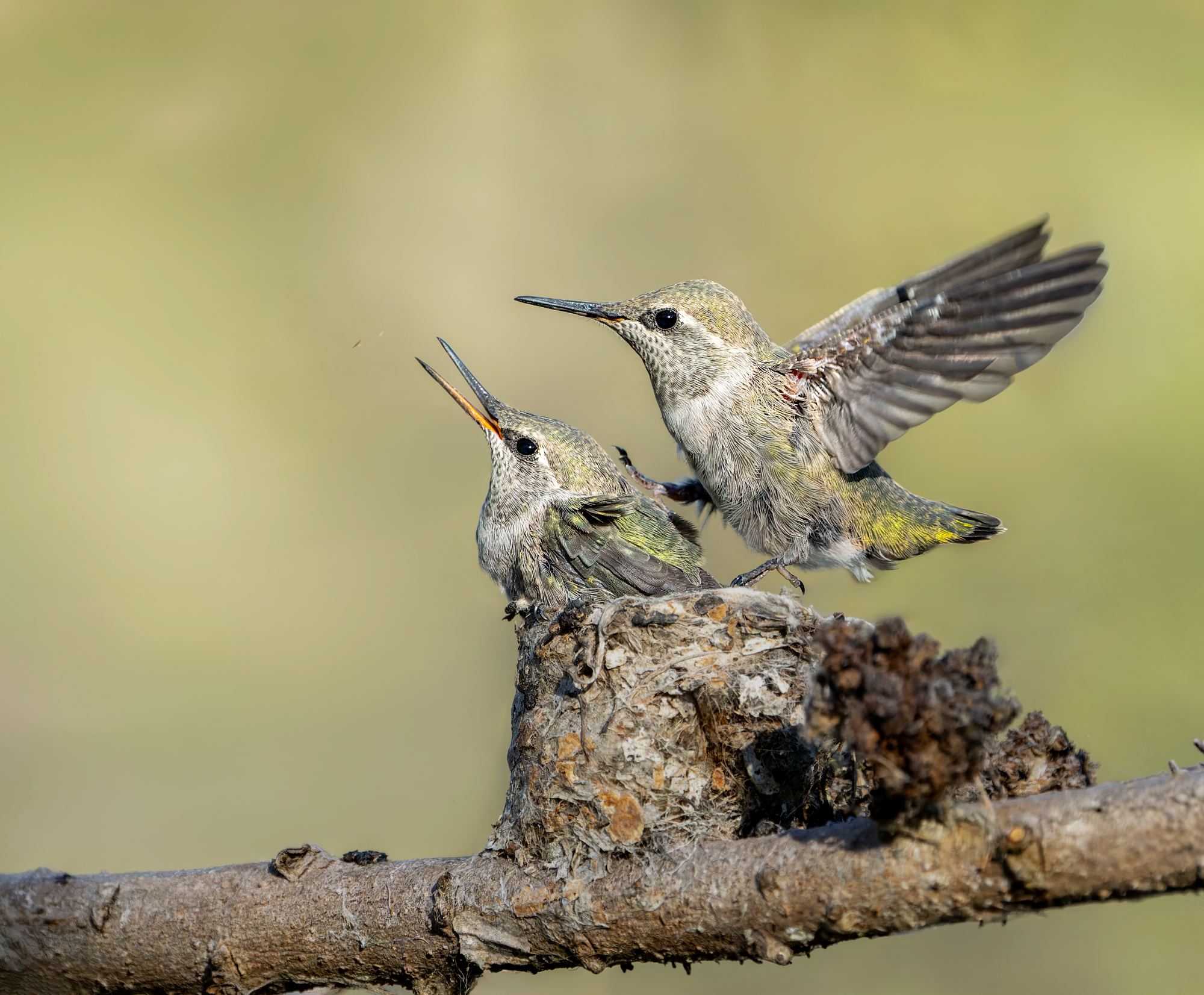
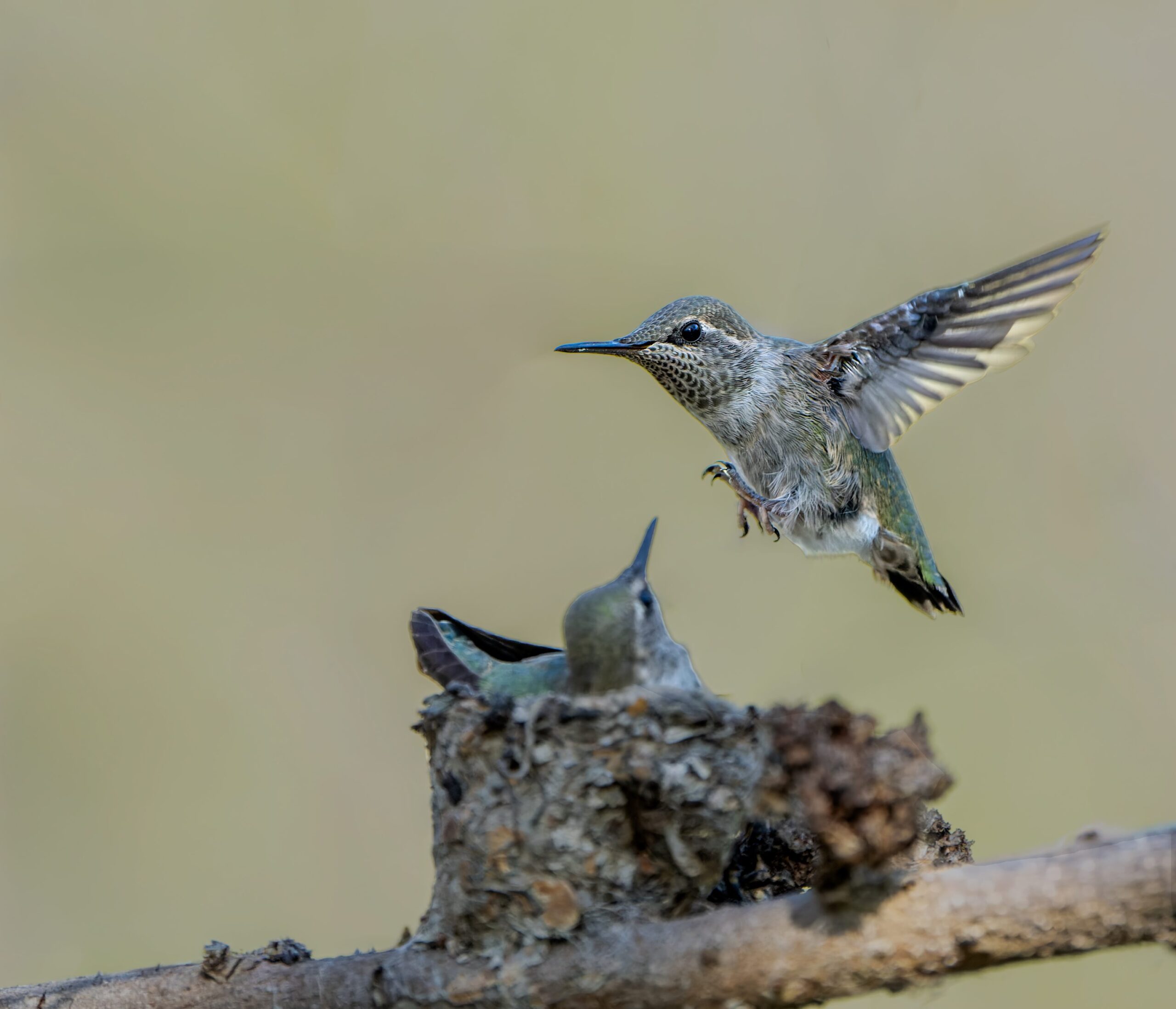
In the next frame, you see the larger chick flying into the nest, returning from its maiden flight. There were a few other photographers there and we were all elated at our good fortune to witness this. You would have thought it was our own child walking for the first time.
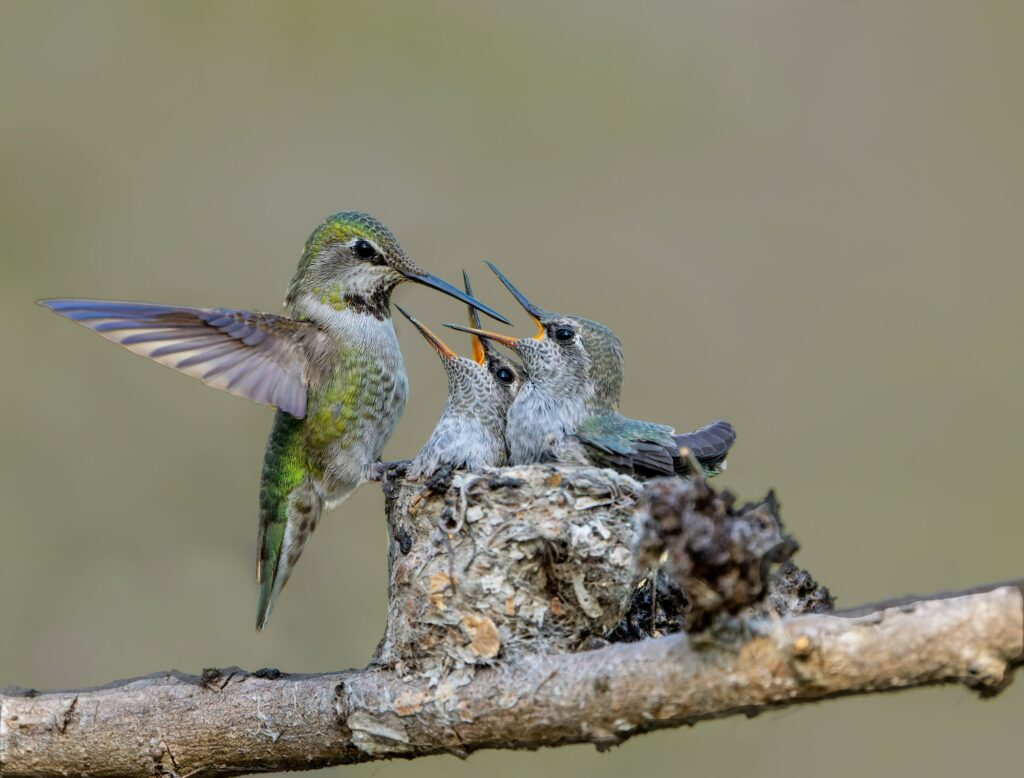
For the final frame, with both chicks in the nest, the mother returns again and feeds them both. This would prove to be the final feeding of both chicks together that I captured.
Day 24
When I arrived at the marsh, I was surprised to find that the nest was empty. On top of that, neither chick was around. Had they fledged and left the area completely? I decided to wait for 15 minutes or so to see if either chick returned to the nest.
About 5 minutes later, I saw the mother patrolling the marsh, collecting gnats and spiders just as she had on all other days. Still, I didn’t see either of the chicks anywhere. After another few minutes of collecting food, the mother flew up to one of her common perches where she goes to rest. This wasn’t a good sign, as she usually comes right to the nest once she’s finished her collecting routine.
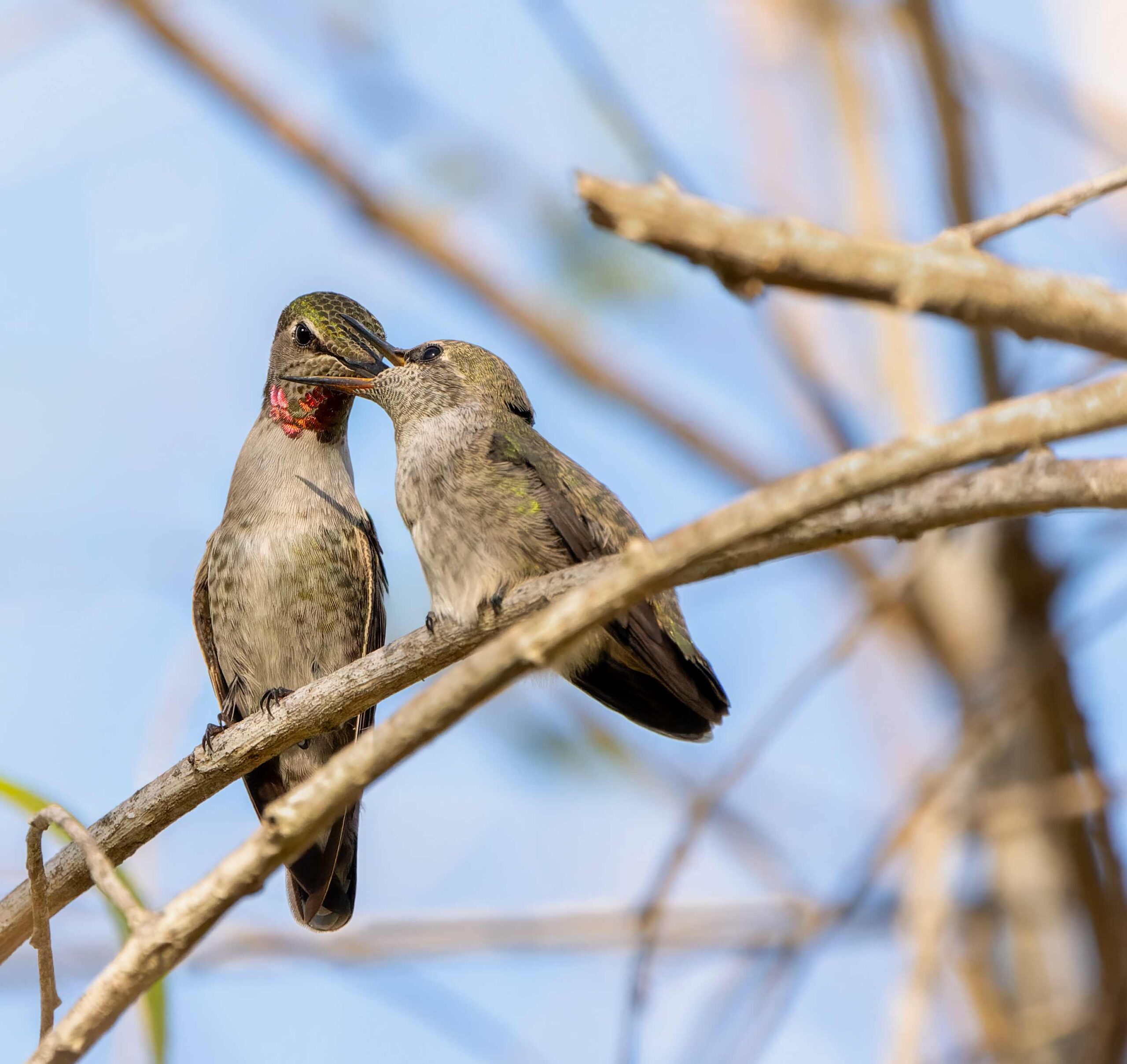
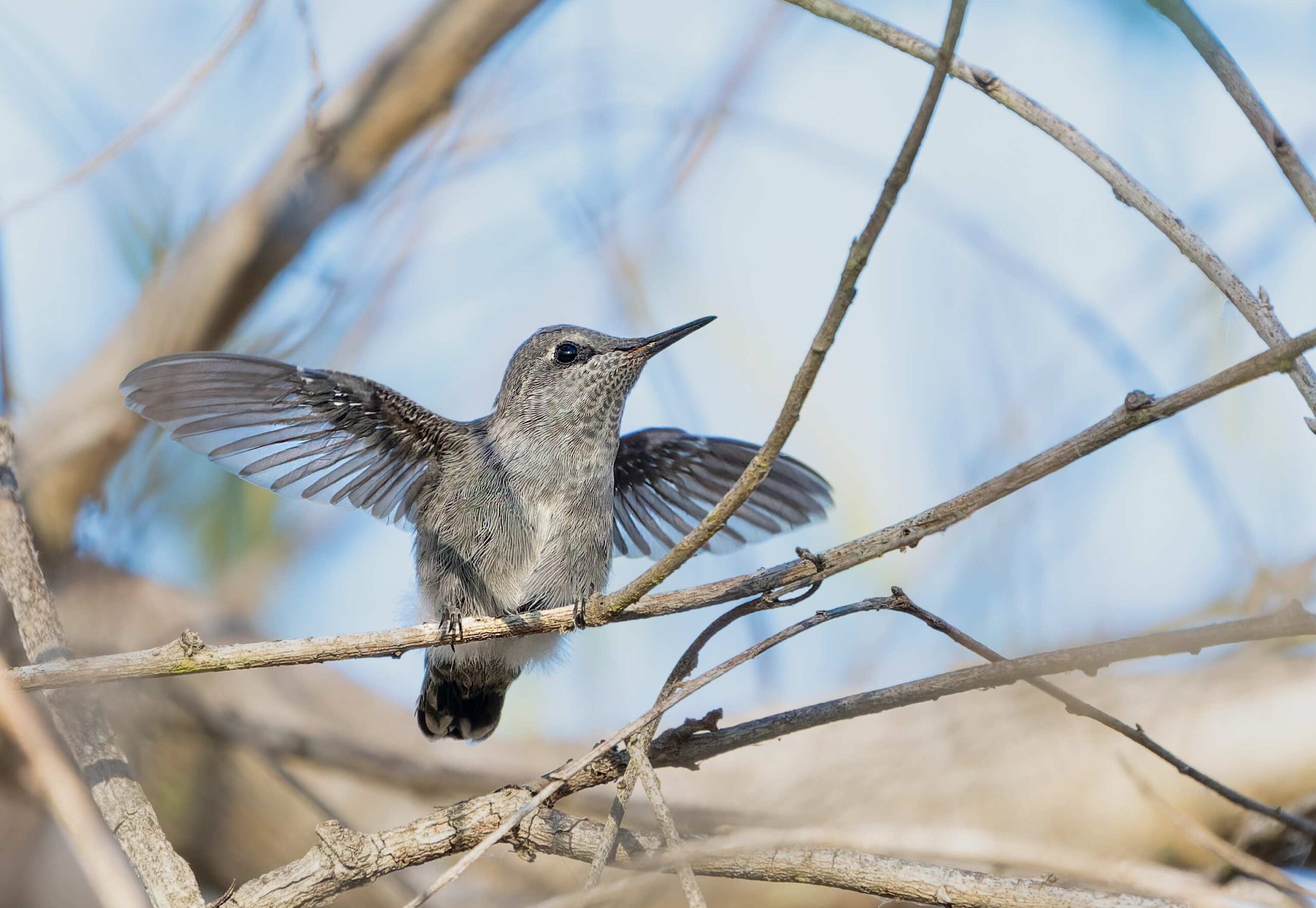
A minute or so later, mom flew across the marsh to the top of a tree immediately to my left and about 20 to 25 feet above me. There she fed one of the chicks sitting in the tree. It turned out that the chick’s camouflage was so good, I had been looking right at the spot where it was perched, but couldn’t see it.
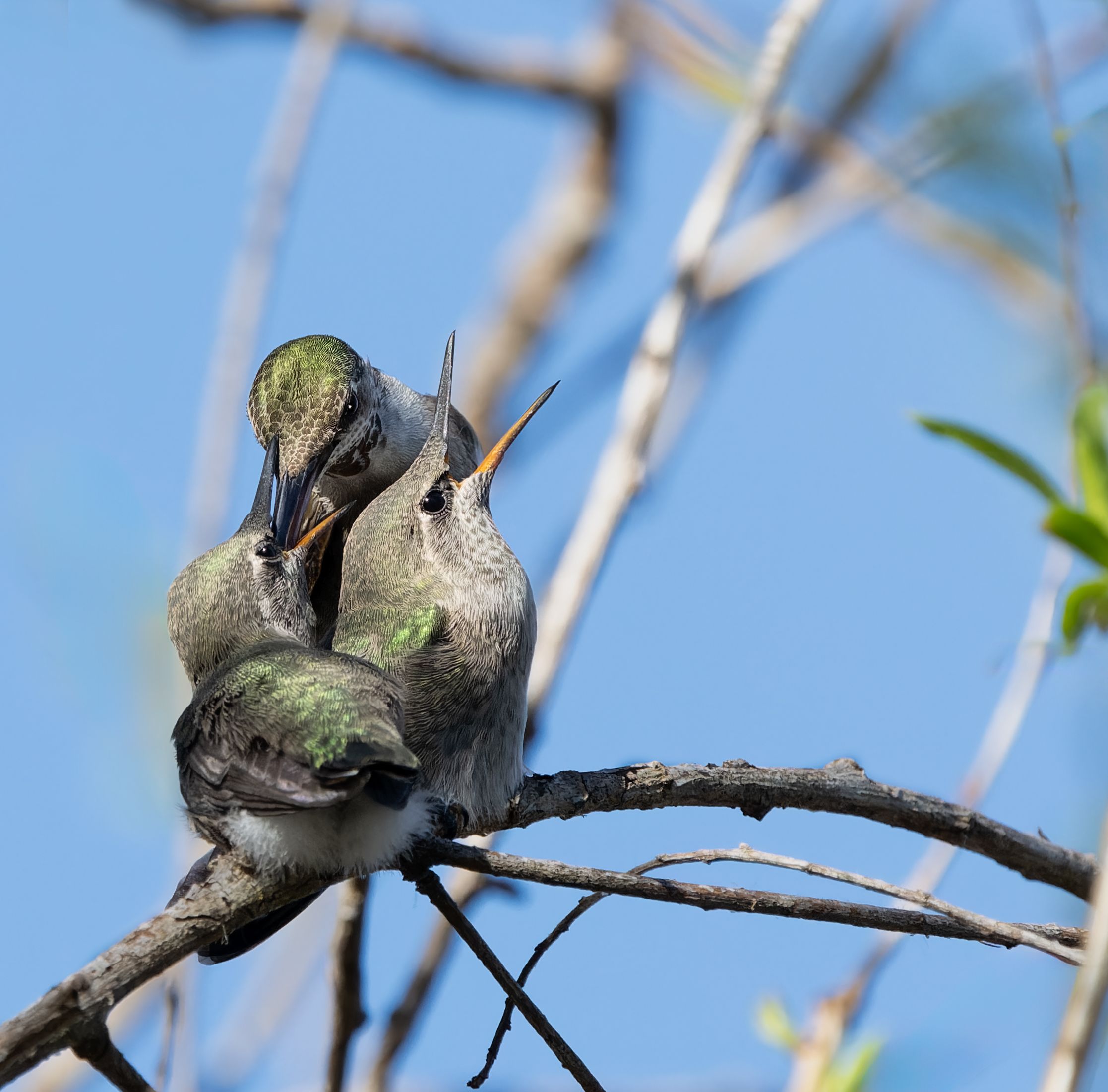
As soon as the mother left, my eye picked up movement about 10 feet below the chick that had just been fed. However, that movement was in a clump of dense sticks in the tree, so I couldn’t make out what it was. Just seconds later, something lifted up and flew to another part of the tree, this time giving me a clearer view. There was the second chick, also fledged and out of the nest! In the second photo here, you can see it with its wings spread, still partially translucent with the feathers not fully filled in.
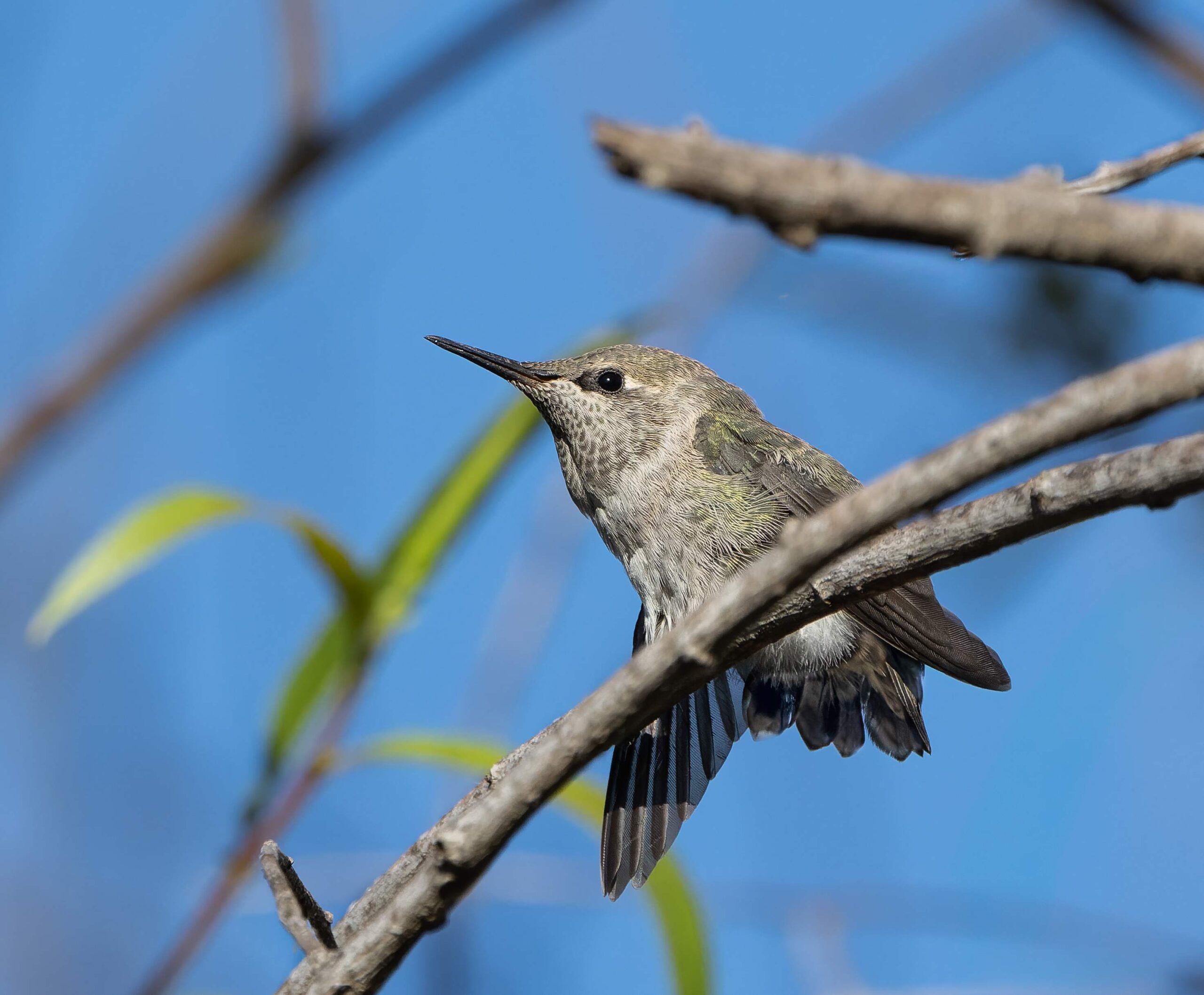
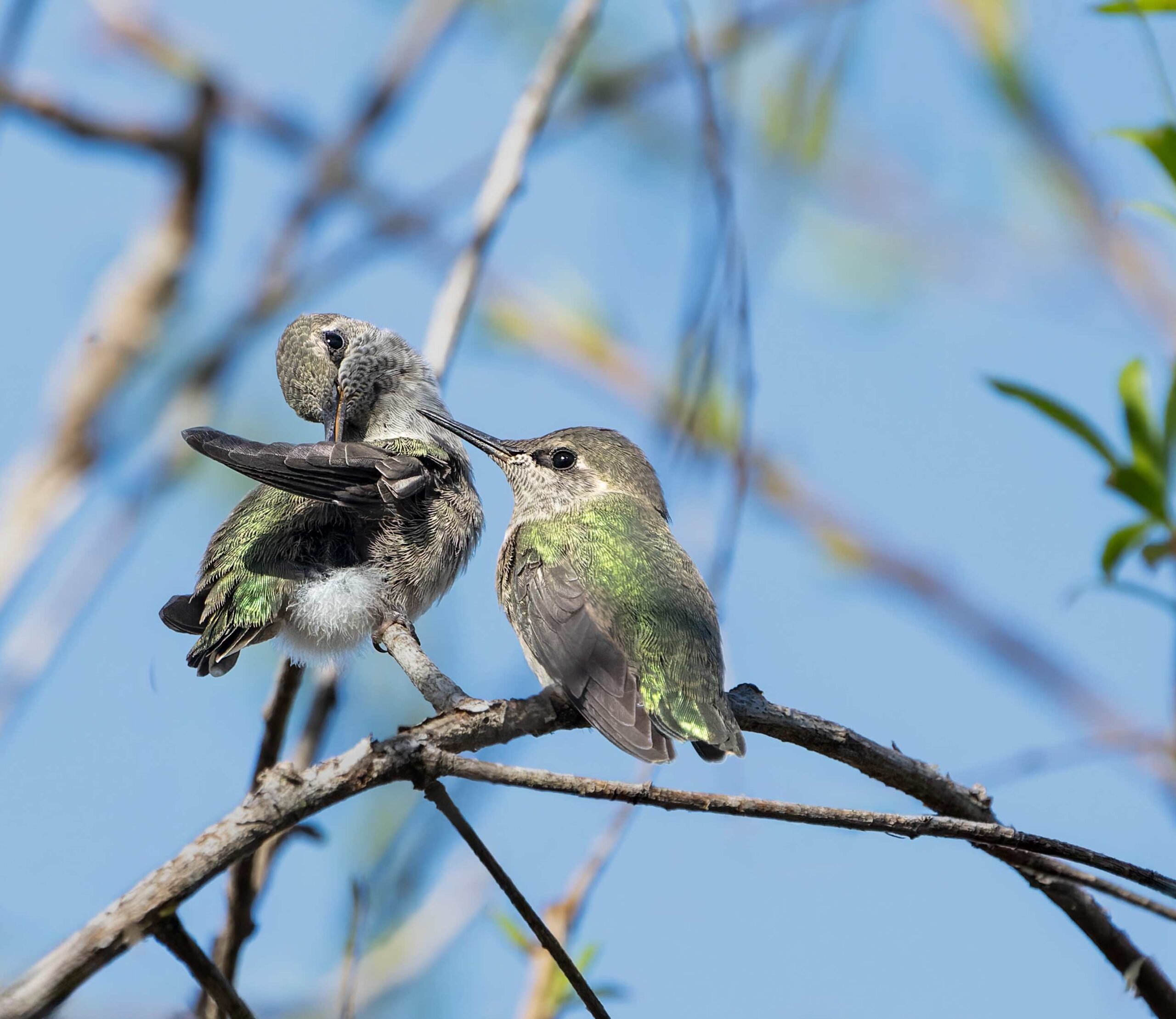
Next, the second chick lifted up and flew to another branch, soon to be joined by its sibling. And just a couple minutes later, the mother returned to feed both chicks. This turned out to be the final feeding that I would witness. Soon after, the larger chick flew off, across and out of the marsh. I stayed for nearly an hour longer and the larger chick never returned.
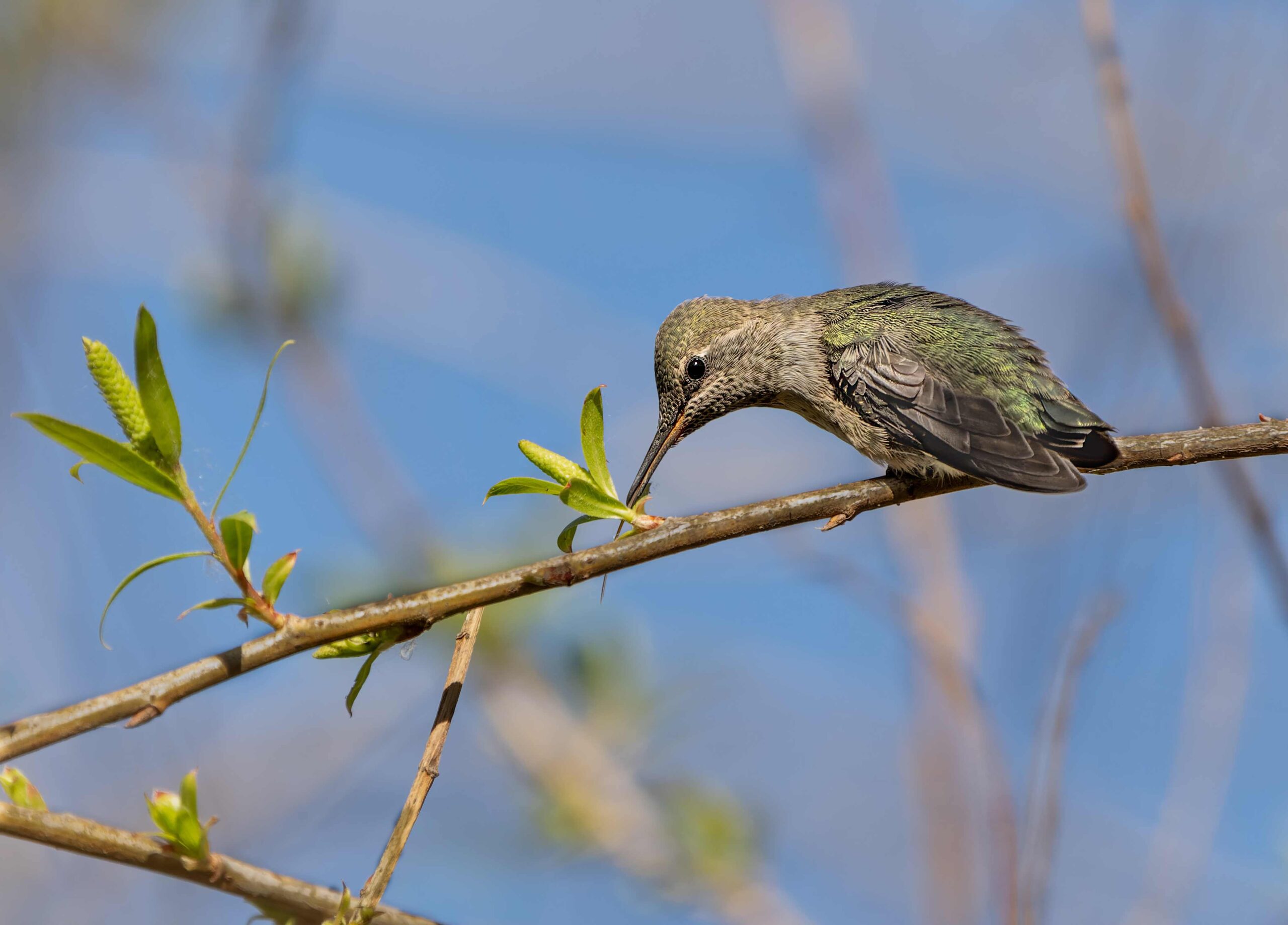
During this hour, the smaller chick was quite successful at hunting on its own. In the second from last shot, you can see it flicking its tongue to pick gnats off a flowering bud on the tree.
Day 25
On this day, I returned to the marsh at the same time as usual, around 7:30 am. Neither chick was in sight anywhere. I decided to wait for 30 minutes to see if the mother would collect bugs and bring them to a different tree where the chicks might be.
Soon, I saw the mother collecting bugs following her normal flight route. However, this time, instead of flying to a branch to feed the chicks, she went to one of her normal resting perches. She stayed there for 15 minutes resting instead of bringing her catch to the chicks, which is not what she would have done if the chicks were still in the area.
I waited and observed for about another hour. Again, the mother collected bugs, but for a much shorter time, just long enough to feed herself. And again, she returned to one of her resting perches.
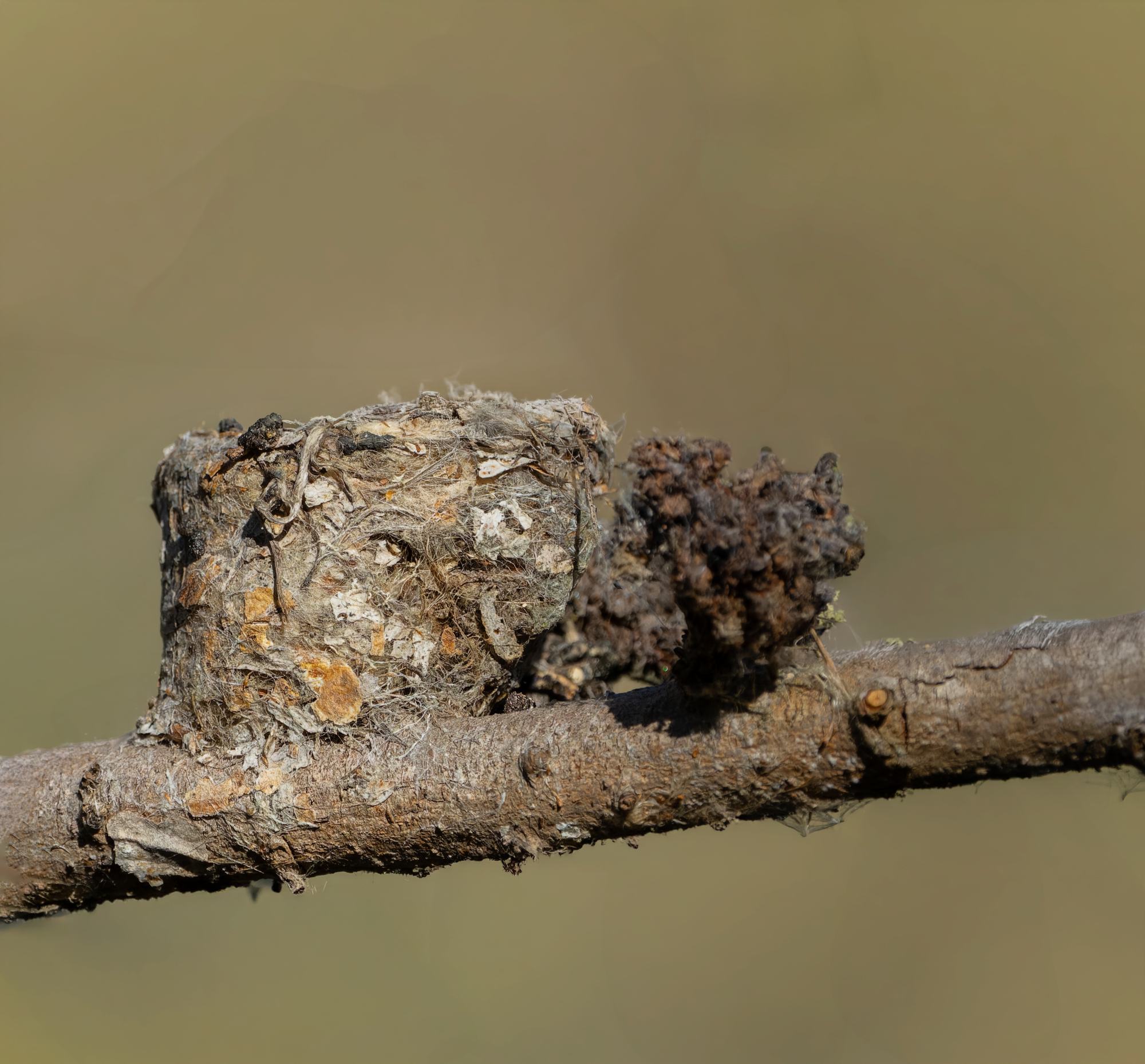
With that, I knew that both chicks had fully fledged and flew off to seek their own hunting areas and to live independently. And now, the nest was empty. What a great experience this had been!

About Bob
I shoot entirely hand-held without a tripod. In fact, I’m pretty sure I have a mild allergy to tripods. Shooting hand-held allows me to move freely and quickly, so I can adjust to fast-moving subjects without anything limiting my movement.
All photos were shot with a Sony A1 camera body and Sony FE 200–600 mm Telephoto Zoom lens. This combination is capable of shooting at 30 frames per second, allowing me to capture many shots I would otherwise miss.
All photos were shot using natural light without any flash or filters in Raw format. Raw format allows for the greatest range of colors, light, and shadows. They were processed in Adobe Lightroom and finished with Adobe Photoshop.